Login
Signup
News
The Arab Network organized a workshop on “The Role of National Human Rights Institutions in the Implementation and Monitoring of the 2030 agenda for Sustainable Development” during the period from 13 to 15 December 2016
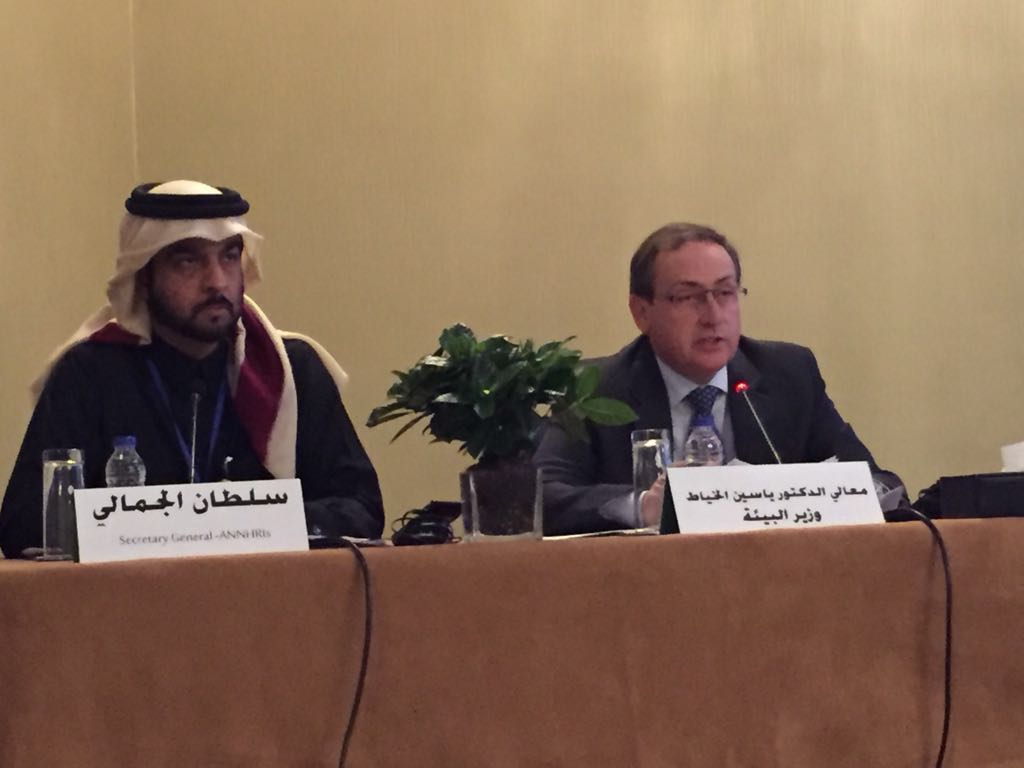
The Arab Network and the National Center for Human Rights in the Hashemite Kingdom of Jordan organized a training course on human rights and the 2030 agenda for Sustainable Development during the period from 13 to 15 December 2016, in cooperation with the Office of the High Commissioner for Human Rights and the United Nations Development Program.
The aim of the course is to strengthen the role of Arab national human rights institutions in the conceptual linkage between human rights and the 2030 Agenda for Sustainable Development, assess the reality of sustainable development in the light of international human rights commitments to the sustainable development agenda, exchange the best practices in the Arab countries, integrate human rights into the agenda and develop strategies and develop a roadmap to involve governments and civil society in the oversight role to implement the agenda.
Dr. Yassin Al Khayyat, Minister of Environment of Jordan, extended thanks to the Arab Network, the Office of the High Commissioner and the United Nations Development Program for their efforts to promote human rights in the implementation of the sustainable development goals, pointing out that NHRIs follow up and monitor the implementation of the sustainable development agenda and the resulting regional plans. This requires building of real partnerships between them and the institutions concerned with the implementation of the sustainable development agenda to ensure the integration of their programs and activities.
Al-Khayyat said: “The Paris Agreement on Climate Change and the World Sustainable Development Agenda are considered as a road map for achieving sustainable development agenda, taking into consideration human rights in light of the major challenges facing our region, He pointed out that the Paris Agreement came to consolidate the global response to the threat posed by climate change in the context of sustainable development and to promote efforts to eradicate poverty. He pointed out that Jordan has submitted the national contribution document in order to implement the requirements of the Paris Convention on Climate Change by reducing the emissions by 14% until 2030. He said that Jordan will collect funding to implement the projects contained in the national contribution document for adaptation and mitigation of climate change.
Mr. Sultan bin Hassan Al-Jamali, said that the course aims to raise the awareness of the national human rights institutions on their role in pursuing and implementing sustainable development goals in their countries, exchange best practices, view and evaluate experiences, identify objectives, to analyze and discuss the challenges facing national institutions in this regard, which will facilitate policy development to work on sustainable development goals and integrate them into future strategies.
Al-Jamali called on developing a collective action plan and partnerships that will contribute to strengthening the capacities of national institutions, and encourage NHRIs to play their role in following up the implementation of sustainable development goals by linking stakeholders in national implementation and monitoring processes in a transparent, participatory and inclusive manner, as part of the global march for the promotion and protection of human rights and collective responsibility.
Al-Jamali called on national institutions to an effective role in encouraging their governments to implement relevant UN recommendations including those of the Conference of Trade and Development which was held in Doha in April 2012, and reaffirmed the importance of assisting Least Developed Countries (LDCs) in their effort to accede to the World Trade Organization (WTO), emphasized the importance of full and effective implementation of the agreed commitments and priority areas as contained in the Istanbul Programme of Action, United Nations Conference on Sustainable Development (Rio+20), and the 17 Sustainable Development Goals (SDGs) of the 2030 Agenda for Sustainable Development.
Dr. Mohammed Adnan Al-Bakhit, Chairman of the Board of Trustees of the National Center for Human Rights of Jordan, Ms. Marta, Regional Director of UNDP, Ms. Afrin Shahrzadam, the High Commissioner for Human Rights addressed the importance of achieving the Sustainable Development Agenda 2030 and the role of national human rights institutions in monitoring the implementation, awareness and education of their objectives