Login
Signup
News
The Arab Network for National Human Rights Institutions Concludes the Regional Dialogue Forum on “The Future of Education, Teaching, and Human Rights Education in the Arab Region”
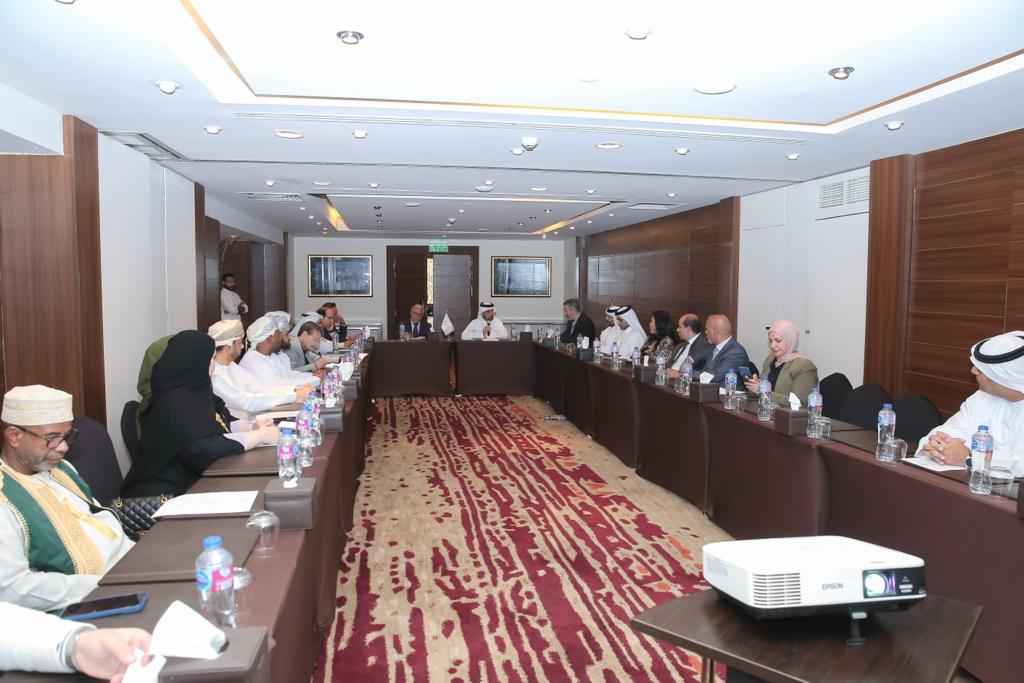
The “Future of Education in the Arab Region” forum concludes its activities… Al-Jamali:
Stopping violations of Palestinians’ right to life, education, and self-determination is imperative
The Arab Network for National Human Rights Institutions follows up on the recommendations of its emergency meeting in Doha and emphasizes the urgent need to support educational policies and programs among Arab countries to address the challenges facing education in the Arab region, the National Council for Human Rights appreciates cooperation with the ANNHRI
Cairo
The regional dialogue forum on “The Future of Education, Teaching, and Human Rights Education in the Arab Region: Towards a New Social Contract” concluded its activities in the Egyptian capital, Cairo. Participants emphasized the urgent need to support educational policies and programs among Arab countries and to coordinate between them, within a common vision to be embodied by the official national institutions concerned in each country according to appropriate formats and mechanisms and in partnership and cooperation with all stakeholders. Participants presented a common vision based on the principles of “A New Social Contract for Education” based on the principles of peace, dialogue, equality, social justice, respect, solidarity, innovation, and creativity.
On the sidelines of the forum, the Arab Network for National Human Rights Institutions held its coordination meeting for the General Assembly, and the member national institutions affirmed the recommendations of the General Assembly during its emergency meeting in Doha and committed to implementing them on the ground.
Mr. Sultan bin Hassan Al-Jamali, Secretary-General of the ANNHRI, stated that the forum comes at a difficult time for the Palestinian people and all peoples of the region and the world, who adhere to the principles of humanity, peace, and human rights. This is due to the violations of the rights of the Palestinian people, including their right to self-determination, and the actions committed against civilians in Gaza, such as killing, forced displacement, ethnic cleansing, food and medicine blockades, destruction of infrastructure, targeting of health and educational institutions, and relief convoys, as well as journalists.
He emphasized that these crimes require swift and decisive action from the international community to ensure respect for the principles of international humanitarian law and international human rights law and to stop these violations against the rights of the Palestinian people.
He called for ensuring the right to education and protection in Palestine, and ensuring its implementation within the framework of the Palestinian cultural identity, pointing out that the Palestinian people have been deprived not only of their right to education but also of their right to life and all their fundamental rights.
Forum Recommendations
Al-Jamali praised the recommendations issued by the participants in the regional dialogue forum on “The Future of Education, Teaching, and Human Rights Education in the Arab Region: Towards a New Social Contract,” stating that these recommendations are the result of collective work that will be submitted to all parties concerned with education in the Arab region.
He added that the forum recommended launching the process of establishing a new social contract for education in Arab countries based on ensuring the right to lifelong quality education, enhancing education through investment in its quality and strong political commitment, comprehensive systemic reforms, allocating higher proportions of budgets to ensure sustainable financing and good governance of resources, diversifying and branching education, linking it to the labour market and sustainable development, and conducting a comprehensive audit of education outcomes at all stages based on a foresight vision that takes into account the rapid developments in the labour market and the increasing reliance on digital technology.
Al-Jamali highlighted the participants’ recommendation to enhance efforts to address the challenges facing education in the Arab region. He emphasized the need for all universities and other higher education institutions, both public and private, to partner with ministries of education, scientific research, and other relevant entities in building the new social contract for education in Arab countries. This can be achieved through supporting research, encouraging applied scientific studies as a gateway to policy development and conceptual approaches.
He stressed the importance of training, motivating, supporting, improving the status and working conditions of all education workers, and paying special attention to ensuring that children have access to pre-school education. He also stressed the need to adopt standards of care in early childhood development, teacher qualifications, and ensuring that they receive appropriate and continuous training.
He emphasized the need to promote the rights of vulnerable groups, including refugees, migrants, and displaced persons related to education, training, and vocational education, as well as the rights of persons with disabilities in all areas of education and their systems. This includes ensuring their full integration and taking into account disability indicators in national statistics to develop effective policies and implement them.
Al-Jamali praised the anticipated participation of national human rights institutions in pushing for the establishment of a new social contract on the future of education and urged relevant authorities in their countries to frame and work on it.
He emphasized the importance of establishing a mechanism to monitor the recommendations of the regional dialogue forum and to disseminate them as widely as possible by the organizing institutions. This is necessary for inclusion in their plans and policies and for effective coordination among them to implement them in cooperation with all stakeholders.
Cooperation and Coordination
Dr. Mahmoud Karem, Deputy Chairman of the National Council for Human Rights, emphasized the important role played by the Arab Network for National Human Rights Institutions in deepening cooperation and coordination among national human rights institutions. Under the Egyptian presidency of the network, he emphasized the utmost importance of protecting and promoting the right to quality education without discrimination for all individuals, while supporting all initiatives aimed at achieving an educational breakthrough that keeps pace with the rapid technological advancements amid current global competition and future challenges. He also emphasized supporting scientific research as the engine of development for our Arab peoples.
Karem commended the inclusion of work on the development of education, teaching, and human rights education in its strategic plan by the Arab Network for National Human Rights Institutions. This confirms the interest of national institutions in issues of quality education, human rights education, and openness to cooperation with all relevant parties and partners interested in promoting the right to education that keeps pace with future developments and challenges.
He also emphasized cooperation with members of the ANNHRI to support joint initiatives to provide the necessary training and funding that enables Arab countries to improve the education sector, which is the basis for achieving development goals and fostering a culture of tolerance and peace.