Login
Signup
News
The Arab Network organized a training course on “Human Rights Mechanisms” in Geneva during the period from 21 to 24 March 2017
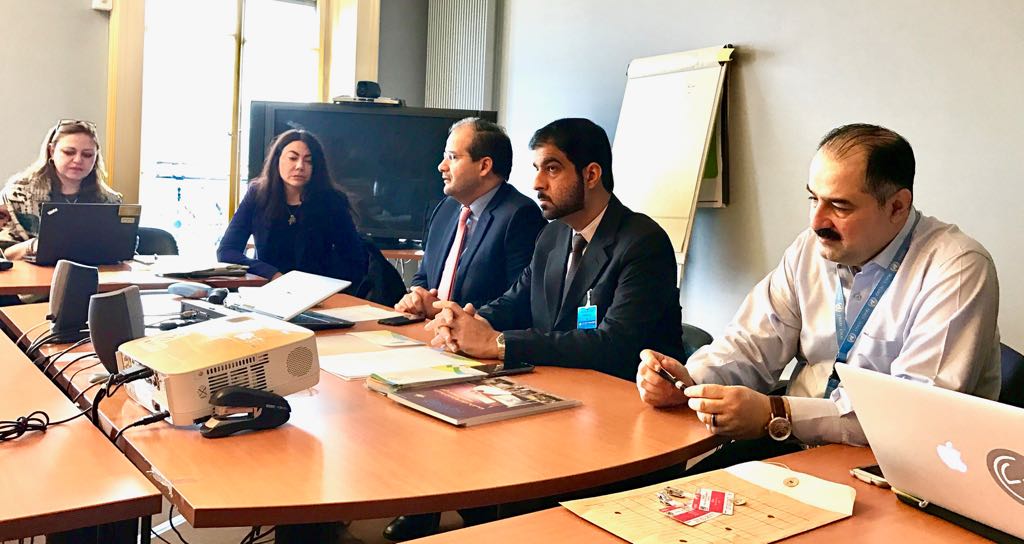
The Arab Network for National Human Rights Institutions and the United Nations High Commissioner for Human Rights organized a training course on human rights mechanisms at the Palais Wilson in Geneva.
In his opening speech, Mr. Sultan bin Hassan Al-Jamali, Executive Director of the Network stressed the need to unify strategies between NHRIs, GANHRI, HRC, OHCHR, United Nations bodies and all stakeholders. We reaffirm what has been emphasized by the Deputy- Commissioner in her last meeting with the secretariats and members of the human rights networks of national human rights institutions that: “the basis for cooperation among all stakeholders in the field of human rights is complementary, rather than competing “. Al-Jamali added that these efforts will help achieve a qualitative leap, including at least changing the moods of peoples and nations towards a genuine desire and will to respect human rights. We and the future generations shall witness the dissemination of the human rights culture that shall forms the conscience of nations and peoples who can live together in peace that will achieve the welfare of citizens and residents.
Al Jamali added that the cooperation between ANNHRI and OHCHR has been reflected in the signing a memorandum of understanding between the two sides on the sidelines of the International Conference on approaches to human rights in conflict situations organized in Doha during the period from 20 to 21 February 2017, based on providing mutual support in all fields including the exchange of experiences and best practices, and strengthening the capacities of Arab national institutions in all areas of human rights, in the context of their mandates on the promotion, consolidation, protection, respect and effective realization of human rights in the Arab States. Al Jamali pointed out that this training session is the second activity after the signing of this MoU, with the aim to strengthening capacities of Arab NHRIs.
The Executive Director of the Network addressed a number of international human rights conventions related to the themes of the session, including Universal Declaration of Human Rights of 1948, Convention on the Prevention and Punishment of the Crime of Genocide1948, International Covenant on Civil and Political Rights of 1966, International Covenant on Economic, Social and Cultural Rights of 1966, Convention against Racial Discrimination of 1965, Convention on the Rights of Women of 1979. Al Jamali pointed out that these conventions have mechanisms that are considered as universal legal guarantees to protect individuals and groups, which lead to the protection of fundamental freedoms, rights and human dignity, including various political, civil, economic, social and cultural rights. Al Jamali added that the declaration on the establishment of The Arab Network considers that the promotion, consolidation, protection, respect and effective realization of human rights in Arab States is the core issue; our reference comes from the values and principles enshrined in the Universal Declaration of Human Rights and the international and regional human rights conventions.
Following the reference to the objective of international conventions and their mechanisms and the cooperation with the United Nations bodies, the role of the other stakeholders is highlighted. Al Jamali said that NHRIs are one of the most important stakeholders, due to their position between civil society and governments, in which they act as a link through which the consolidation of visions, coordination of efforts and activating cooperation can be achieved; furthermore, NHRIs enjoy a considerable degree of credibility and legitimacy in the system of international bodies and mechanisms as well as their governments. Al Jamali called on national institutions to fulfill their role of protecting and promoting human rights in their countries, which is considered one of the forms of cooperation with the treaty committees through the submission of parallel reports and follow-up of the implementation of their recommendations.
Mr. Mohamed Ali Al Nosour, head of the North Africa and Middle East Division of the High Commission, stressed the need to support the network, highlight its role at the international level and support its activities including participation with the Network in the organization of international conferences. Al Nosour also discussed the role of North Africa and the Middle East division, its geographical mandate, its working methods in preparing reports for countries according to its mandate, as well as the division’s activities with Governments, civil society organizations and regional organizations. Al Nosour also addressed the post of High Commissioner and its powers and functions.