Login
Signup
News
The Arab Network for National Human Rights Institutions is organizing a panel discussion titled “Israeli Aggression on Gaza; The New Catastrophe”
The call by the United Nations to establish stricter standards for the selection of its representatives to ensure neutrality.
The demand for the occupation to compensate for the reconstruction of the Gaza Strip.
The formation of a team to collect documented evidence of Israeli occupation crimes in its recent war.
The evaluation of the extent of material and human losses and damages resulting from the war on Gaza.
The Arab Network for National Human Rights Institutions has called for practical proposals to hold Israeli war criminals and their supporters accountable, ensuring they do not escape punishment. The network also urged for communication and coordination with countries, groups, entities, and lawyers working towards this goal, supporting their efforts. It demanded that Israel be compelled to pay compensation to contribute to the reconstruction of the Gaza Strip, through continued activism to pressure the international entities responsible for carrying out these tasks.
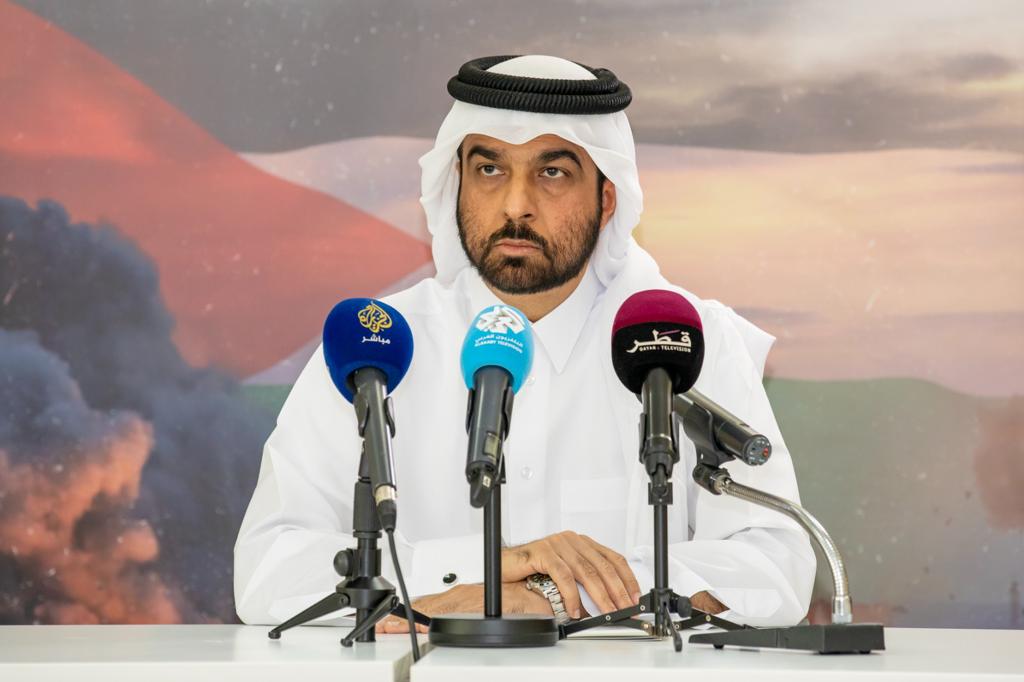
During a remote dialogue symposium held by the network, coinciding with the International Day of Solidarity with the Palestinian People, titled “Israeli Aggression on Gaza; The New Catastrophe,” Mr. Sultan bin Hassan Al-Jamali, the Secretary-General of the ANNHRI, called for the formation of a team to collect documented evidence of Israeli occupation crimes in its recent war on the Gaza Strip and the West Bank. He emphasized the need to document crimes that have not yet been recorded, as well as to inventory and evaluate the extent of material and human losses and damages, providing the legal team with this information.
Al-Jamali underscored the importance of boycotting the occupation and halting any normalization with it. He called for pressuring countries, entities, and sectors supporting the Israeli occupation, emphasizing the need to unify efforts in this regard until the Arab people in Palestine achieve their independence and establish their independent state with its capital in Jerusalem.
Al-Jamali proposed inviting the United Nations to establish stricter standards for selecting its representatives, commissioners, experts, and rapporteurs, as well as anyone involved in protecting and promoting human rights. This would ensure neutrality, transparency, and equality in addressing global critical issues.
He also called for the formation of a working group to develop proposals (tools and procedures) to enhance the effectiveness of the international human rights system in general. This would strengthen its ability to facilitate humanitarian aid delivery in conflict zones, halt violations and aggression, and ensure uniform standards of justice.
Al-Jamali stated that the failure of the international human rights system and the West’s denial of the principles and concepts it espoused, which were considered a reference for its societies’ culture and policies, is evident today through its practices and policies showing disregard for these principles. He emphasized that these rights are only for the West, enforcing inequality and racism, and directly participating in Zionist violations of international humanitarian law, international human rights law, and general principles of international law.
He continued: “Therefore, there must be a stance to coordinate joint human rights efforts that contribute to redirecting these countries to the right path and obliging them to respect the principles of international human rights law. This includes proposing new tools and using all forms of pressure to achieve this, including holding the Israeli occupation accountable for violations of international humanitarian law, international human rights law, and the rules of international law.”
He stressed that the national human rights institutions that are members of the Arab Network believe in the principles and standards contained in international human rights law. They see the interest of the Arab peoples and the peoples of the world in enhancing these rights and this system. They consider their dedication to, education about, and promotion of these rights as priorities in their work, and they are open to all stakeholders to collaborate in this field.
He also emphasized the importance of faith in these concepts and principles and the continued effort to enhance them in collaboration with partners. He stressed that the West’s failure and denial of the international legality of human rights and the international human rights system should not affect our interaction and cooperation with this system. He added, “Rather, we will enhance our cooperation and interaction and work with all activists and stakeholders to strengthen and enhance this system, ensuring its neutrality and tools to stop violations, hold criminals accountable, and prevent them from escaping punishment.”
He emphasized the need to develop a joint action plan that addresses violations against the Palestinian people in Gaza, including the Israeli occupation’s crimes against Palestinian civilians such as massacres, bombings, sieges, destruction of civilian objects, and displacement, leading to a humanitarian catastrophe in Gaza. He also mentioned its military operations and attacks in the West Bank, which also constitute war crimes.
International Community’s Failure
Al-Jamali stressed the importance of addressing the international community’s failure to resolve the root cause of the crisis, which is the deprivation of Palestinians of their rights recognized by international legitimacy. He said, “Efforts must be made to expose and hold the Israeli occupying authorities accountable for their violations and crimes against Palestinians.”
The dialogue seminar held by the network aims to understand the vision and proposals of the member national institutions regarding the current situation of the Palestinian cause. This is in light of the failure of the international human rights system to stop the aggression and compel the occupation to allow humanitarian aid without conditions. It also discusses the deliberate targeting by the occupation forces of hospitals, civilian objects, ambulance crews, relief and rescue teams, and UNRWA staff. Additionally, it aims to discuss the negligence and incompetence of some UN officials in dealing with Palestinians, their failure to fulfil their mission of promoting and protecting human rights, their reluctance to describe the occupation’s crimes, their failure to take necessary measures, and the double standards in dealing with issues in our Arab region