Login
Signup
News
Press Release on conducting a training course on human rights system
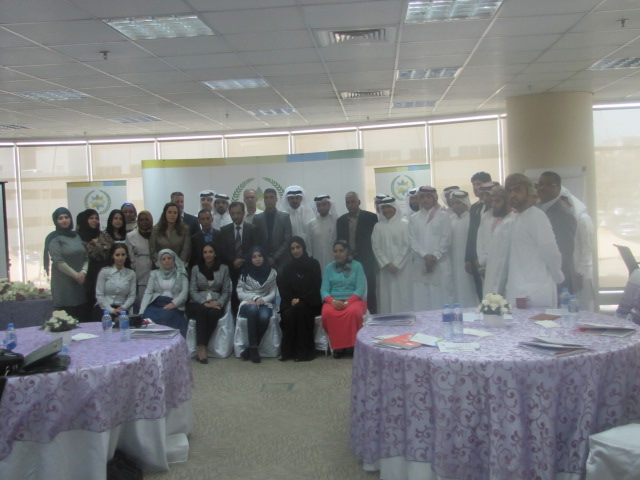
Sheikha Ghalia bint Abdulrahman Al Thani, the Executive Director of the ANNHRI, stated that the Directorate General of the ANNHRI organized a training course on “human rights system” for recent associate members of national institutions including non-specialists and stakeholders working in the field of human rights, in Doha on 15 – June 16, 2014.
It is worth mentioning that this training course is the first activity carried out by the network independently, as provided in its terms of reference stated in its Statute, that is supporting the capacity of national institutions by raising capacities and competencies of its staff, which will enable these institutions to carry out the role assigned to them, to achieve the ultimate goal of establishing the network that is promoting, developing and protecting human rights in the Arab world; national institutions are of great importance, as it acts as a link between governments and civil society organizations on one hand, and international mechanisms on the other hand.
This course comes to meet needs of member institutions, and that were defined after studying nature of national institutions in the Arab world, and challenges and difficulties they face; therefore the strategic plan was developed together with the operational plan of action for three years, to address these needs, in which this course was one of its outputs that were acknowledged in the last meeting of the General Assembly of the network held in Egypt on 01/05/2014.
This training course provides basic information about the human rights system, needed by everyone who works in the field of human rights, where its agenda deals with emergence and development of human rights, contractual and non-contractual human rights mechanisms, the UPR mechanism and international humanitarian law; In addition to the emergence of national institutions and their role in accordance with the Paris Principles, as well as classification of national institutions and its accreditation by the International Coordinating Committee of National Human Rights Institutions.
More than twenty five participants registered from member national institutions, including Egypt, Sudan, Djibouti, Libya, Tunisia, Algeria, Morocco, Mauritania, Jordan, Palestine, Iraq, Qatar, Bahrain, and Oman. Moreover, There is also a notable participation of some civil society organizations in the State of Qatar, as well as significant participation of ministries and departments and institutions involved in the field of human rights in the State of Qatar.
The ANNHRI brings together all national human rights institutions in the Arab region, which were established in accordance with the Paris Principles adopted by the decision of the General Assembly of the United Nations No. 134/48 dated December 20, 1993.
The establishment of the Arab Network of National Human Rights Institutions was announced in the 7th Annual Meeting of Arab National Human Rights institutions that was held in April 2011 in Nouakchott, by which Doha was declared the headquarters of the network.