Login
Signup
News
ICHR -Palestine takes over the presidency of ANNHRIs for its new session
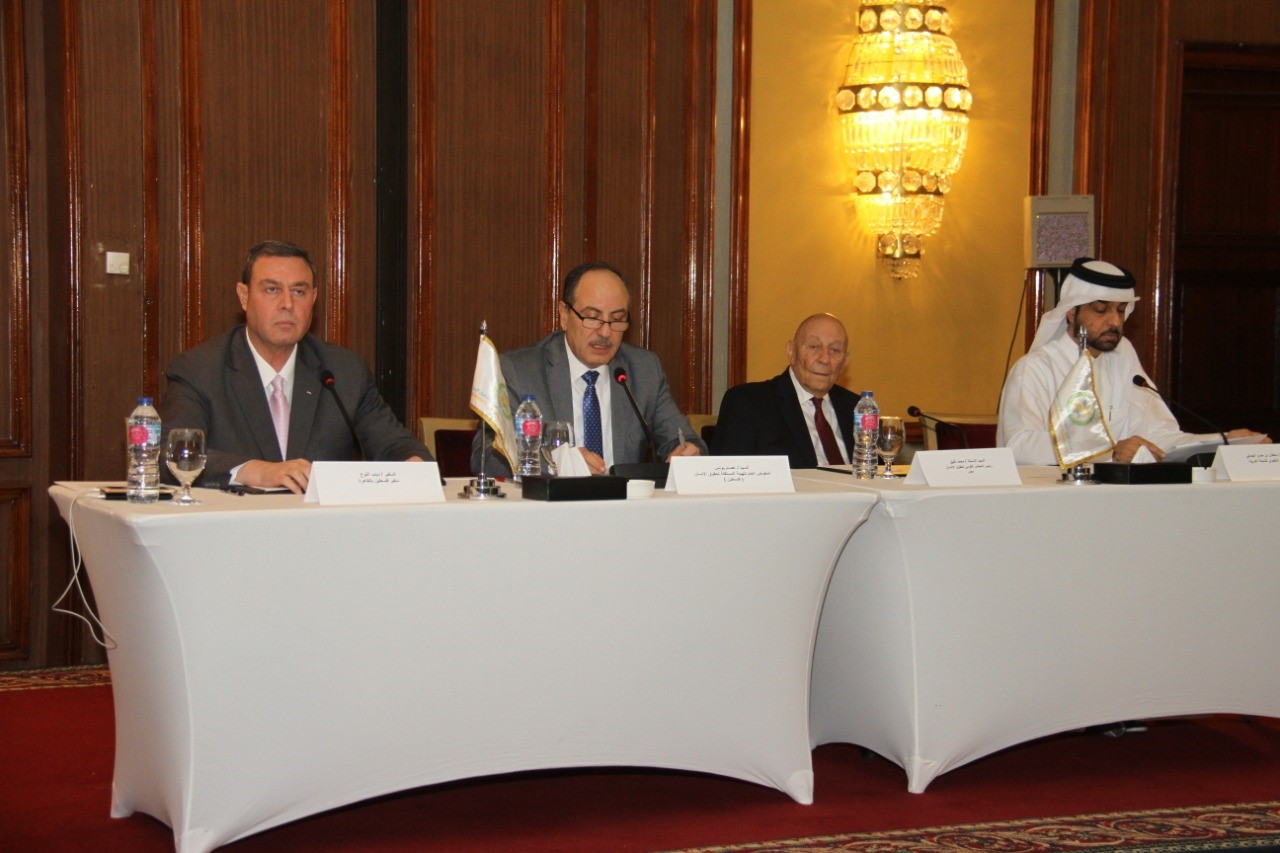
ANNHRI General Assembly – located in Doha- held the meeting of its General Assembly at the Egyptian capital Cairo on 4 -5 of December 2019. The GA elected Mr. Essam Younis, Commissioner -General of the Independent Committee for Human Rights in Palestine (ICHR), as Chairman of the Arab Network in its new session – the sixteenth – succeeding Mr. Mohamed Fayek, Chairman of the National Council for Human Rights in Egypt.
In his opening Statement, Mr. Mohamed Fayek explained that the General Assembly was supposed to be held in Palestine and said: “Difficulties that you are aware of have prevented this”. At the same time, he welcomed with satisfaction holdin the meeting in Cairo as chosen by the Independent Committee for Human Rights in Palestine. He pointed out that the Arab Network paid great attention to the Palestinian question and made it a standing topic on its agenda and held many seminars and conferences in this regard in many Arab capitals and at the United Nations headquarters in Geneva as an issue related to human and peoples ’rights to self-determination.
Fayek said: The convening of this General Assembly is organized under extremely complicated circumstances, especially in light of the measures taken by the Israeli occupation authority and the United States of America. These measures violated international humanitarian law, human rights conventions and United Nations resolutions, and completely blocked the way to any peaceful solutions. The recent US decision is front and centre of this block after legitimizing the construction of settlements in the West Bank and scraping the two-state solution. Accordingly, he added, Israel has only two options, the first of which is to consider the Palestinian lands as a homeland for all Arabs and Jews alike with equal rights. He pointed out that this path is inconsistent with, eliminates everything that Israel has planned along with its ambitions to establish a state for the Jews. As for the second option, Israel will continue to support the occupation and reinforce its image as a racist state, which the Palestinians will resist. Here, he says, lies the predicament set by the Israeli-American coalition to destroy the path to peace. He further noted that all the previous reasons drives everyone to welcome Palestine as the chosen cair of ANNHRI in its new session.
On his part, His Excellency Mr. Muhammad Shallalda, Palestinian Minister of Justice, said in his speech: “I came here today bearing the greetings of the chairman, His Excellency the Prime Minister and the love of the Palestinian people in appreciation for your human rights efforts and the initiatives taken to the uphold the worth and dignity of the Arab person. In a speech delivered on his behalf by His Excellency <<<< the Ambassador of the State of Palestine to Egypt, Chalalda stressed the role that he described as the inspiring and great role that the Arab Network for National Institutions plays in networking between national institutions. A role played towards raising the professional capabilities of these institutions, spreading a culture of human rights in the Arab region in general and supporting the Independent Palestinian committee for Human Rights in particular. Furthermore, to aid the Palestinian issues through various activities, from organizing conferences, meetings and correspondence to international institutions. The network pays special attention to issues related to detainees and Jerusalem and issues of the Palestinian people in general.
He said: “we Palestinians seek the minimum right that international resolutions provided for. He further added: “In order to achieve this and in the framework of achieving and grasping our independence, we are working tirelessly on our international status and drawing our place among nations. He pointed out that the Palestinian leadership has been keen to adhere to, respect international treaties and work on localizing, harmonizing these treaties with internal Palestinian legislation and laws, while holding an absolute belief that Palestinian human rights must be reinforced by legislation, methodology and practice. He also said: “There is no barrier hindering us except this hateful occupation that despises peace, equality and rights, which breathes racism and undermines the rights of a billion and a half Muslims in Jerusalem.
In the same context, Mr. Sultan bin Hassan Al Jammali, Executive Director of the Arab Network, thanked Mr. Mohamed Fayek for his efforts during his tenure as president of the network and described it as commendable. Al Jamali also congratulated the Independent Committee for Human Rights in Palestine represented by its commissioner, Mr. Essam Younis, on assuming the new presidency for the sixteenth session. He further pointed out that the General Administration of Human Rights has succeeded in implementing and completing all its general directives and recommendations during the successive presidency periods of the network.
He said: The public administration was able to accomplish all the itemson the agenda for the years from 2013 to 2019, indicating that the new strategy of the network will focus on creating tools to spread the culture of human rights in Arab societies in a way that contributes to accepting the other and promoting freedom of opinion and expression. Al-Jamali indicated that the network will continue to work to achieve all its goals according to its updated strategy without losing sight of any goal. This will be manifested by preparing fixed topics to be worked on every year while leaving space in the annual plan to cover urgent issues to keep pace with the Arab network through the concerns with regard to the international human rights system and the needs of NHRIs that arise in connection to it.
For his part, Mr. Essam Younis, Commissioner-General of the Independent Committee, described the transition of the Network Presidency to the Independent Committee for Human Rights in Palestine as a significant and historic event for Palestine. He said: “This event coincides with our celebration of the 25th anniversary of the establishment of the Independent Committee for Human Rights”.
He added:”As a national human rights institution, we work under extremely complex political conditions that no other national institution is facing. This is a result of the Israeli occupation, its colonial and systematic apartheid policies, along with the accompanying blockade of the Gaza Strip and the attempt To Judaize the Arab city of Jerusalem, separate it from its Palestinian surroundings, as well as separating the West Bank from the Gaza Strip. He further pointed out that the members of the Committee appreciate the special attention that the Arab Network pays to Palestine through its successive presidencies, its members and its General Secretariat, since it represents a top human rights priority as well as being the cause of all Arabs. He also added: “We express our appreciation for the support extended to us by the members of the network and its general secretariat, as well as standing by our side in various forums and their aid to the legitimate rights of the Palestinian people established by international law and international conventions on human rights.
Younis noted that the Arab Network has established a distinctive position in the Arab legal scene and has clearly contributed to enhancing the capabilities of Arab national institutions and raising their capacities to enable them to play their role and achieve their mission. He said:” As chairpersons of the network, we look forward to working with the General Secretariat and with the members of the network to continue building on the achievements that have been accumulated during the past years and implement the action plan that was approved by the General Assembly of the network. During the opening session, partners’ statements about their cooperation with the Arab Network were heard. This included the speech of Dr. Abdel Salam Sayed Ahmed, Director of the United Nations Center for Training and Documentation in the Field of Human Rights, the statement of Mr. Mounir El Fassi, representative of the Department of Human Rights in the Arab League. It also included the word of Mrs. Nagia El Hashemi, representing the United Nations Development Program, Mr. Akram Khalifa, representative of the United Nations Economic and Social Committee for Western Asia.
The first workshop, chaired by Mr. Essam Younis, President of the Arab Network for National Human Rights Institutions, dealt with the major theme of the General Assembly, under the title “The Israeli Collective Penal Policy in the Occupied Palestinian Territories”. The workshop witnessed speeches by Mr. Mohamed Fayek, President of the National Council for Human Rights, and Mr. Sultan bin Hassan Al Jammali, Executive Director of the Arab Network. The third workshop under the same title was chaired Mr. Mohsen Awad from the National Council for Human Rights in Egypt, during which Mr. Nabil El-Arabi presented a paper titled “collective punishment and international law”.
Dr. Michael Link United Nations Special Rapporteur on the situation of human rights in the Palestinian territories presented a paper entitled “Collective sanctions policy in the Palestinian territories since 1967”. Dr. Ammar Dweik, Director General of the Independent Committee for Human Rights in Palestine also presented a paper entitled “Israeli collective sanctions on the ground.”