Login
Signup
News
Arab Network for National Human Rights Institutions Organizes Regional Dialogue Forum on “Human Rights: Promoting Equality and Combating Discrimination, Including in the Context of Migration”
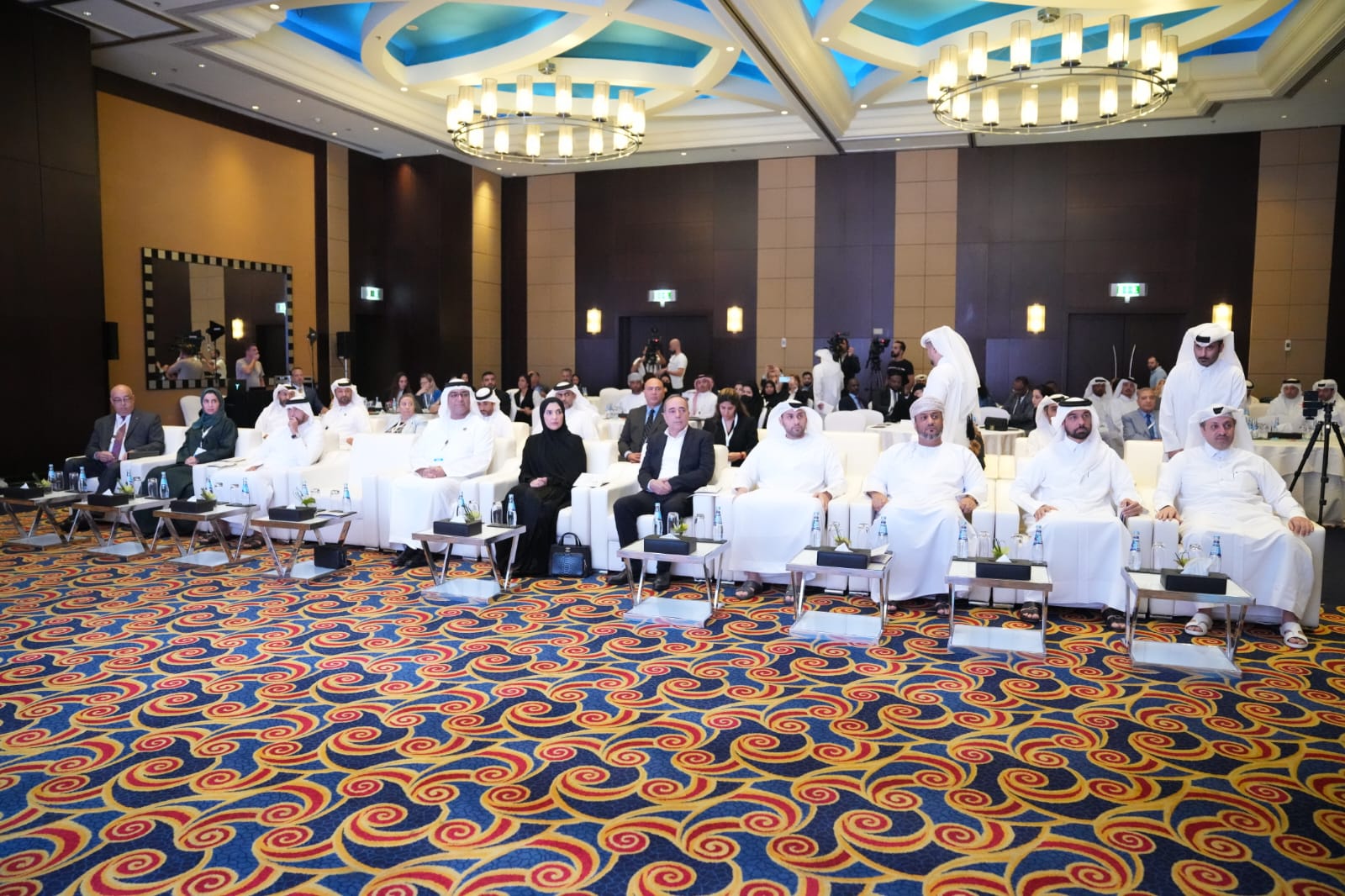
Today, the Regional Dialogue Forum on “Human Rights: Promoting Equality and Combating Discrimination, Including in the Context of Migration” was launched. The forum is organized by the Arab Network for National Human Rights Institutions and the National Human Rights Committee, in collaboration with the Office of the United Nations High Commissioner for Human Rights and the Office of the High Commissioner for Human Rights in the Middle East and North Africa. The forum will last for two days.
The forum, which includes experts from Qatar and various countries around the world, aims to develop international human rights mechanisms to promote equality, prevent discrimination, and address racism and racial discrimination. It also aims to increase understanding of the challenges and practices in addressing racism and discrimination, and to enhance the rights of migrants.
In her opening remarks at the forum, Her Excellency Mrs. Maryam bint Abdullah Al-Attiyah, Chairperson of the National Human Rights Committee, emphasized that promoting equality and combating discrimination are priorities for the Gulf Cooperation Council (GCC) countries, which are witnessing significant changes in their approach to equality and non-discrimination, alongside a growing focus on the rights of expatriate workers.
Al-Attiyah said, “We welcome all measures taken by states, just as we welcomed the developments related to achieving equality and eliminating discrimination undertaken by the State of Qatar. These include legislative reforms that guarantee and protect the rights of expatriate workers, based on the state’s permanent constitution, which enshrines equality as one of the fundamental pillars of Qatari society, and in fulfilment of our international commitments as outlined in the Convention on the Elimination of All Forms of Racial Discrimination and other related treaties.”
She added, “Qatar National Vision 2030 has contributed to reinforcing this direction, and the National Human Rights Committee will continue to work with all its national, regional, and international partners to achieve further progress.”
The Chairperson of the National Human Rights Committee clarified that the forum will provide a valuable opportunity for exchanging experiences, best practices, and challenges related to its subject. She expressed hope that the forum’s recommendations will contribute to shaping a roadmap for moving forward and her eagerness to continue collaborative efforts to enhance human rights and advance standards of equality and non-discrimination both regionally and internationally.
She called on national human rights institutions in the region to persist in their efforts to achieve further progress, including intensifying awareness and educational programs in human rights generally and in the field of equality and non-discrimination specifically, and expressed her gratitude to all the organizations involved in organizing the forum.
For his part, His Excellency Mr. Sultan bin Hassan Al Jamali, Secretary-General of the Arab Network for National Human Rights Institutions, emphasized in his speech at the forum that the network has a strategic plan with objectives and activities that align with partnerships with the United Nations Development Programme (UNDP), the Office of the United Nations High Commissioner for Human Rights (OHCHR), the Arab League, the Arab Charter Committee on Human Rights, the Arab Institute for Human Rights, the United Nations Educational, Scientific and Cultural Organization (UNESCO), and other stakeholders from civil society organizations and international organizations.
Al Jamali pointed out that over the past thirteen years, the Arab Network for National Human Rights Institutions has worked to promote and protect human rights in the Arab region through hundreds of awareness, educational, coordination, and training events. These included conferences, forums, dialogues, workshops, courses, working groups, guides, and efforts that have contributed to building and refining skills in various fields of human rights. The network has also focused on integrating and targeting groups beyond national institutions, including governmental bodies, parliaments, judiciary, civil society organizations, activists, journalists, and human rights defenders, depending on the nature and subject of the activity.
He also highlighted that these activities, covering a range of topics directly related to the forum’s subject, include challenges related to security and human rights, combating hate speech and extremism, codes of conduct for public employees and law enforcement officers, promoting civil space and freedom of expression, human rights education, and combating discrimination against women and marginalized and vulnerable groups. These topics address issues of discrimination and methods to reduce and combat it, aiming to eliminate it by fostering a generation deeply rooted in human rights concepts and culture.
Al Jamali urged the stakeholders, saying: “Let us enhance our knowledge of international standards and mechanisms to combat racism and racial discrimination, not to mention sharing best practices and experiences from governments and national human rights institutions in this field.”
In his speech, Mr. Mazen Shaqoura, Regional Representative for the Middle East and North Africa (MENA) of the Office of the High Commissioner for Human Rights, emphasized that combating discrimination and racism is crucial for achieving a fair and equal society where all individuals can enjoy their rights without discrimination or bias, as stipulated in the Universal Declaration of Human Rights.
He praised the significant progress made by Gulf Cooperation Council (GCC) countries in the field of human rights, all of which have ratified the International Convention on the Elimination of All Forms of Racial Discrimination and have made considerable progress in its implementation.
Shaqoura said: “Today, we see developments in policies and practices aimed at protecting the rights of all individuals, including migrants, in the region. Several GCC countries have established comprehensive legal frameworks to prevent discrimination based on race or nationality and are undertaking significant reforms in this regard.”
He added: “We have also observed an increase in interaction from GCC countries with human rights mechanisms. This is a positive development that opens the door to more collaboration in building capacity and raising awareness about the importance of protecting human rights for all individuals,” highlighting that “these efforts not only contribute to the promotion of human rights but also help build more cohesive and just societies.”
In this context, he explained that, given the OHCHR’s mandate to promote and protect human rights, organize discussions, provide technical support to countries, and build the capacity necessary for human rights protection, the forum was organized to discuss combating racial discrimination, international standards for combating racism, legal frameworks for migration in the region, and positive experiences and best practices of countries and human rights institutions in combating racial discrimination.
The Regional Representative for the Middle East and North Africa (MENA) of the Office of the High Commissioner for Human Rights called on all relevant parties to continue cooperating and working together to advance human rights in the region to achieve further progress and success in protecting human rights and combating all forms of discrimination. He expressed confidence that joint efforts will lead to positive and sustainable results for all individuals in GCC countries, looking forward to constructive and fruitful discussions that will contribute to enhancing human rights and achieving equality in the region.