Login
Signup
News
ANNHRI’s Executive Director Conducts Series of Intensive Meetings in Djibouti
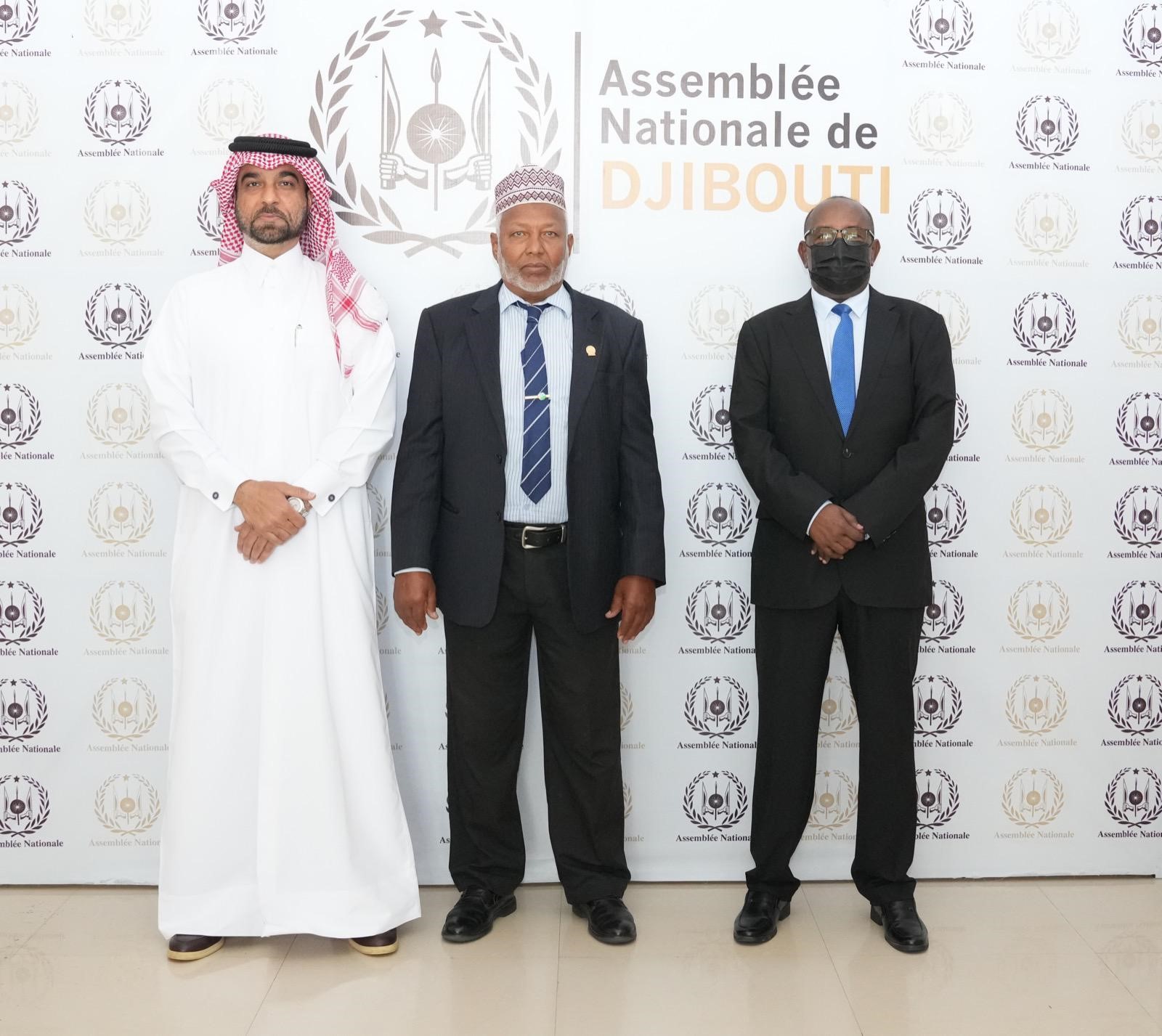
During his visit to the Republic of Djibouti…
Al-Jamali: “There is a need to grant financial and administrative independence to NHRIs.”
Djibouti – 7 February 2022
H.E. Mr. Sultan bin Hassan Al Jamali, Executive Director of the Doha-based Arab Network of National Human Rights Institutions (ANNHRI), stressed the need for financial and administrative independence of NHRIs. He also stressed ANNHRI’s commitment to carrying out its tasks in order to scale up the capacities of member NHRIs so that they carry out their role in compliance with the Paris Principles of 1993. He reiterated ANNHRI’s keenness to enable the National Commission of Human Rights (CNDH) in the Republic of Djibouti to be based on independence, pluralism and transparency, which would enable it to play a major role in the process of promoting and protecting human rights.
Al Jamali said that during a series of intensive meetings that he held in the Republic of Djibouti with a number of sovereign institutions; including the Cabinet and the National Assembly, along with his visit to CNDH’s headquarters and listening to CNDH’s chairperson, members and cadres about the most important challenges that hinder the Commission in assuming its mission to spread and enshrine human rights.
During his meetings with H.E. Mr. Mohamed Ali Houmed, Speaker of the National Assembly of Republic of Djibouti, Al-Jamali stressed the important role of the Assembly in amending the law establishing CNDH to be in line with the Paris Principles in terms of transparency, financial and administrative independence, and benefiting from best practices in the process of drafting CNDH law. He called for expanding consultations on developing the draft law to serve the promotion and protection of human rights. In addition, he expressed ANNHRI’s full support for all the efforts exerted by the government and civil society organizations in this regard. For his part, His Excellency Mr. Houmed welcomed ANNHRI’s visit and praised its role in strengthening the protection and promotion of human rights in the Arab region. Houmed stressed the parliament’s keenness to provide legal support to CNDH, pointing out that the parliament had recently established the Human Rights Committee in the National Assembly, out of their belief in the importance of enabling independent human rights work in the republic.
In his meeting with His Excellency Mr. Najib Mohammed, Secretary General of the Cabinet, ANNHRI’s Executive Director recommended the importance of adequate governmental financial support for CNDH in Djibouti. He noted that this support is one of the most important prerequisites for establishing NHRIs, along with granting them financial and administrative independence, in order to preserve the balance of the independence of CNDH in carrying out its advisory role to state institutions in full impartiality. Al-Jamali said: “ANNHRI is keen for Arab NHRIs to be at the highest level of independence, which empowers them to obtain the highest rating in the Global Alliance of National Human Rights Institutions (GANHRI), which will enhance their position in the international human rights system and their participation in the United Nations Human Rights Council (UNHRC). This would be reflected positively on the reality of human rights in their countries.” Moreover, Al-Jamali praised Djibouti’s political leaders’ openness to dialogue in order to establish a NHRI that would fully carry out its role and mandate in accordance with its powers and competencies. For his part, Mr. Najib affirmed that the government is oriented to strengthen an independent national committee based on international standards for NHRIs.
During his visit to CNDH’s headquarters in Djibouti, H.E. Mr. Sultan Al-Jamali was briefed on the challenges and obstacles facing CNDH, and stressed ANNHRI’s great support for the CNDH in Djibouti to overcome these obstacles, whether at the technical, operational or legal level. Al-Jamali started his inspection tour of CNDH’s headquarters with a meeting with its chairman, H.E. Mr. Suleiman Omar Aden. The two sides stressed the importance of upgrading the technical staff of the Commission and picking up their capabilities by holding specialized training courses, in addition to providing logistical support from ANNHRI in line with its role, rules and regulations. Al-Jamali called for the need to develop an action plan in order to raise the capabilities of CNDH’s technical and functional cadre by scheduling training courses and workshops within Djibouti that concerned with capacity-building and spreading a culture of human rights, tolerance and acceptance of the other, as well as ensuring their participation in ANNHRI’s training programs at the regional level.
In a press release, Al-Jamali said: “This visit comes within the framework of ANNHRI’s tasks to support NHRIs and move up their capacities to empower them to have “A Status” rating for NHRIs that are members of GANHRI in line with their compliance with the Paris Principles of 1993.” He pointed out that CNDH in the Republic of Djibouti is a member of ANNHRI, which has its permanent headquarters in the State of Qatar and includes under its umbrella 15 NHRIs in the Arab region. This visit had two main objectives, the first of which is to understand the logistical, legal and technical challenges hindering CNDH of Djibouti and to meet with the CNDH’s Chairman, members and staff and listen to their needs in order to support it to be classified in GANHRI in Geneva. As for the second part of the visit, it aimed at meeting with the republic’s sovereign institutions and discussing with them the importance of strengthening CNDH’s independence in line with the legal nature of NHRIs, as well as urging them to secure adequate financial funds for the Commission.
It is noteworthy that the National Commission for Human Rights (NCHR) of Djibouti was established on 23 April 2008 by Decree No. 2008-0103/PR/MJAP. Amendments regulating its dispositions were done by a law adopted on 20 July 2014 to make it more compatible with the Paris Principles, particularly with regards to the Commission’s independence from the government, giving the Commission investigative powers, stipulating the need for pluralism among its members and stressing the need for allocating adequate human and financial resources. In line with the new law, 7 new commissionaires were appointed by presidential decree in May 2016 for a five-year mandate. The newly appointed commissioners have backgrounds from public administration, bar association, civil society, and religious and academic communities.