Login
Signup
News
ANNHRI organizes Mohamed Fayek I: foundation course on “The Human Rights System”, 8-10 December 2019 in Cairo
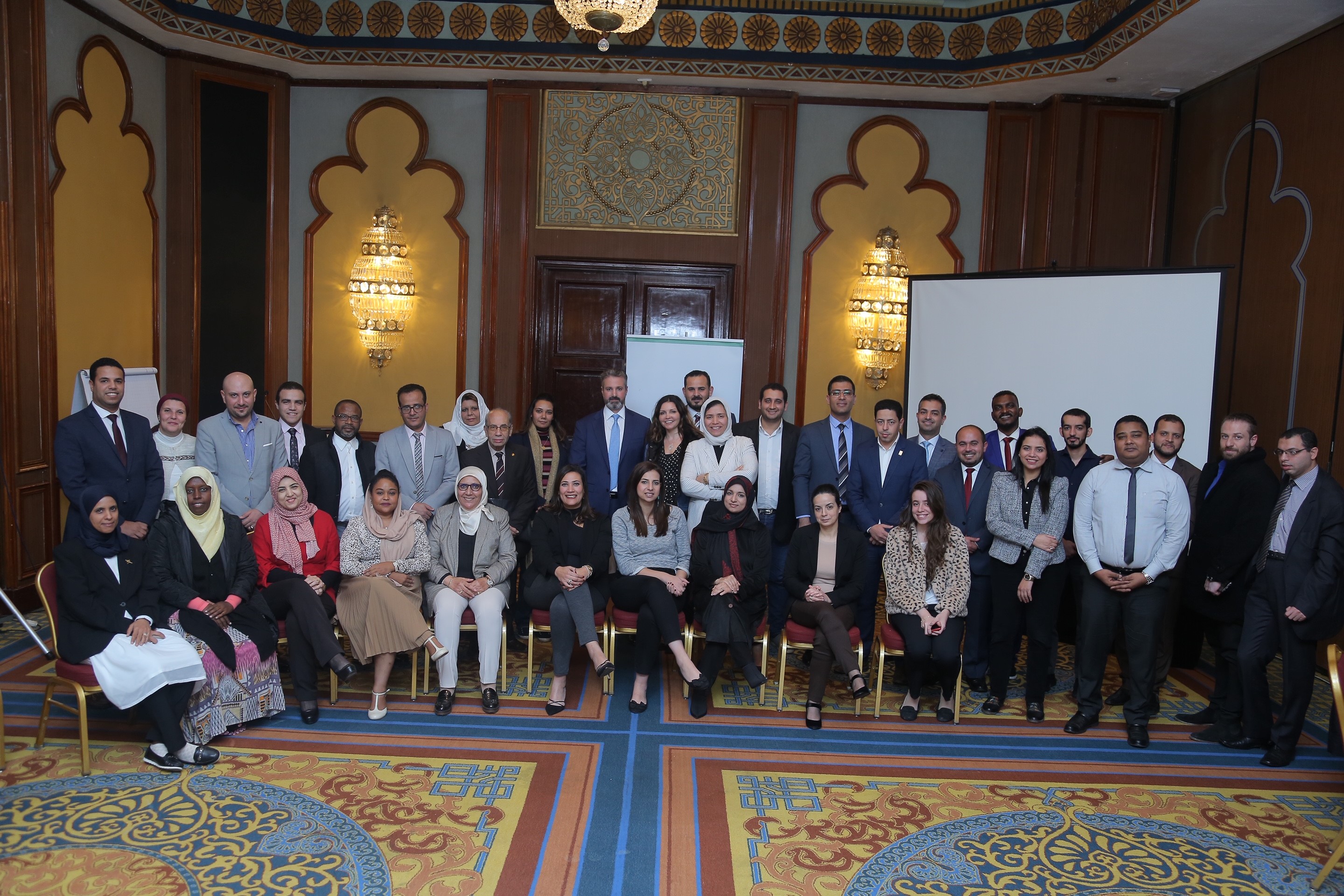
In honour of one of the human rights advocates who was credited for and printed his stamp on the march of this movement in the Arab region, the Arab Network organized an annual training course that bears the name of the Arab freedom fighter Mohamed Fayek, the President of the National Council for Human Rights in Egypt, during the period 8-10 December 2019 in Cairo. This comes in the context of the plan of the General Assembly of ANNHRIs to enhance its outreach by raising the capabilities of members of civil society and national institutions working in the area of human rights . This also comes as part of implementing the assembly’s plan to spread a culture of human rights, education and empowerment in this area. The tribute lies within the framework of ANNHRIs endeavour to honour prominent pioneers of the human rights movement in the Arab world, and in appreciation of the efforts of its leaders at the Arab, regional and international levels, especially those who were the cause of its emergence and success. This is to honor his legacy and encourage future generations to follow his lofty values to advance the path of human liberation, enhance human dignity and protect human rights.
During his opening speech to the session, Fayek pointed out that the Arab Network for Human Rights has played a pivotal role in the area of human rights, and has placed the Palestinian question at the top of its priorities.
Fayek added that ANNHRI should focuses on maintaining independence from the three ruling authorities of any Arab country, as well as not to forget that the human rights movement is a primarily national movement.
For his part, Mr. Sultan bin Hassan Al Jammali, ANNHRI Executive Director, said that Muhammad Fayek, head of the National Council for Human Rights, had a prominent role in the field of human rights. The decision to organize a fixed annual training bearing the name of Mohamed Fayek comes as an appreciation of the efforts of Fayek in serving the human rights cause as a prominent Arab human rights defender. A tribute to a man who dedicated his life to defend freedoms across his Arab nation and abroad, and carried his nation’s project to advance the national liberation movement, until he became a symbol of this movement in Africa. That is why today, the training course in this area has been named after him. This is to enshrine his legacy and encourage future generations to follow his lofty values to advance the path of human liberation, enhance human dignity and protect human rights.
This session came within the framework of ANNHRIs endeavour to continue developing the capabilities of the national human rights institutions members of the network. It aimed at introducing new staff of national institutions to the international human rights system, and addressed the fundamental principles and concepts of human rights, their origin and development. The session further touched upon the international human rights law and International humanitarian law, contractual and non-contractual human rights mechanisms, and the universal periodic review mechanism. This was in addition to discussing the emergence and role of national institutions in accordance with the Paris Principles, and explaining how these institutions are classified and accredited by the International Coordination Committee of National Human Rights Institutions. These activities were all organized to develop the relevant skills for new human rights workers in civil society and national institutions.
The training course was attended by representatives of national human rights institutions from 12 Arab countries (Jordan, Algeria, Sudan, Sultanate of Oman, Palestine, Egypt, Mauritania, Iraq, Comoros, Djibouti, Lebanon and Morocco). A number of representatives of civil society institutions in Egypt also participated.
This training program achieved a number of remarkable goals. The most important of which was to specifically promote the knowledge of the participants and develop their skills and experiences on the accreditation of national institutions to the Sub-Accreditation Committee of the Global Alliance of National Human Rights Institutions (GANHRI). The program also focused on the broad mandate of national human rights institutions, their role and functions, and cooperation with stakeholders and regional human rights mechanisms.
Participants from the national human rights institutions in the Arab countries and civil society institutions reported that they have benefited from this training program, since it deals with issues at the very heart of the national human rights institutions action. They also praised the opportunity provided by the session to exchange the best practices among the participants whom mostly are newly appointed in their institutions. Their participation was based on the criteria set for the target group of cadres of national human rights institutions members of the Arab Network.