Login
Signup
News
ANNHRI Organizes Educational Seminar on “The Role of National Mechanisms in Promoting Human Rights” 6-7 June – Muscat, Oman
Maryam Al-Attiyah: The violations of the Israeli occupation continue against the Palestinians, along with the policies of Judaization
Al-Jamali: Stable, independent and sufficient funding is a must for NHRIs to carry out their tasks
Muscat: 6-7 June 2022
H.E. Chairperson of the Doha-based Arab Network for National Human Rights Institutions (ANNHRI) Maryam bint Abdullah Al Attiyah affirmed that ANNHRI, in line with the decision of its General Assembly, will continue to support the Independent Commission for Human Rights (ICHR) in Palestine. Thus, ANNHRI seeks to empower and enhance ICHR capabilities by promoting and protecting human rights in the face of the continuing systematic violations of the Israeli occupation against the Palestinians, its Judaization policies against the occupied city of East Jerusalem, use of excessive force against defenceless civilians, and nonstop violations of the sanctity of Al-Aqsa Mosque and the Church of the Holy Sepulchre, as well as the assault and harassment of worshipers in them. In addition, she pointed out that the occupation authorities continue to pursue a policy of targeting Palestinian journalists, which does not stop at beating and arrest, but rather amounts to killing; as was the case with the martyred Palestinian journalist Shireen Abu Aqleh; Al-Jazeera correspondent, and the occupation forces persistence in attacking her funeral, in a new violation of legitimacy and the international system of human rights.
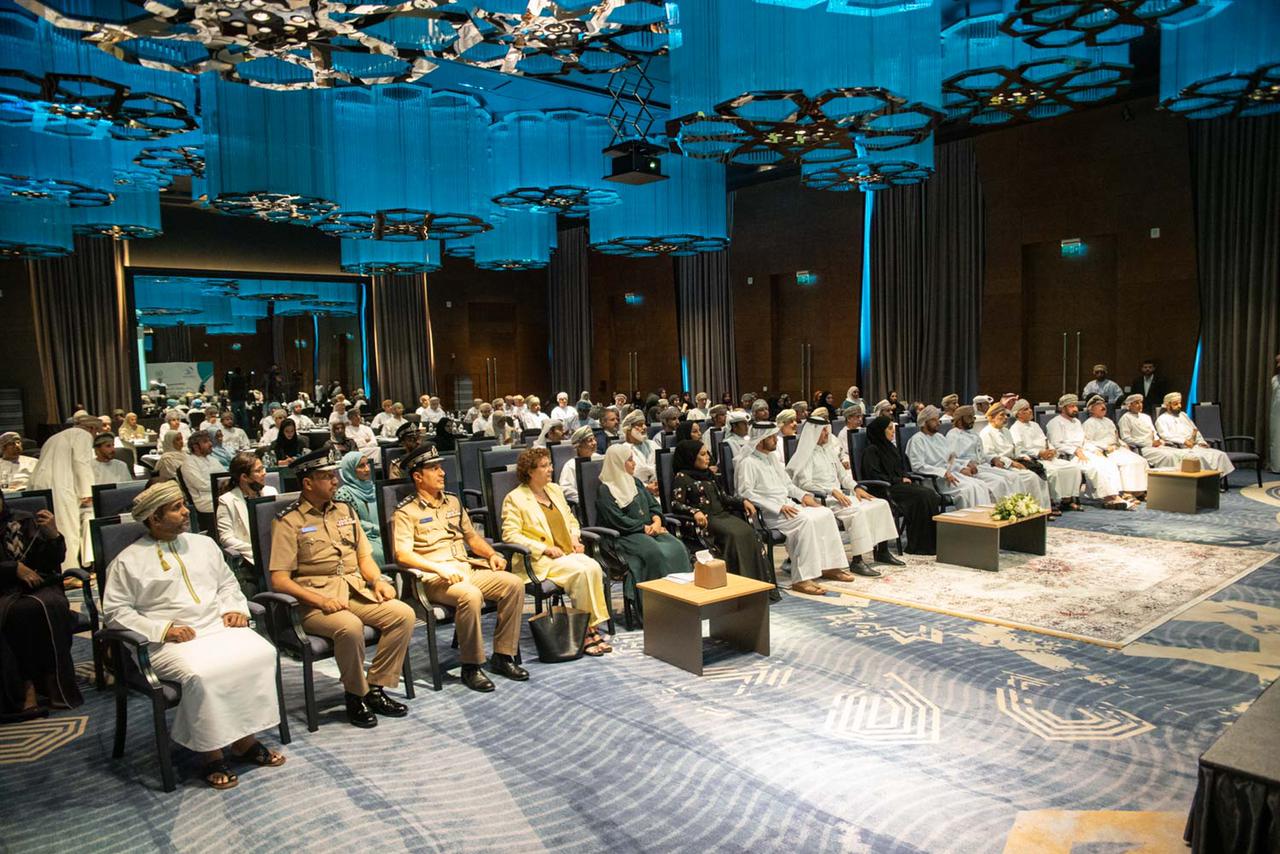
This came during a speech delivered by Al-Attiyah at the opening of educational dialogue seminar entitled “The Role of National Mechanisms in Promoting Human Rights,” which was organized today by ANNHRI in partnership with Oman Human Rights Commission (OHRC) in Muscat. Her Excellency Mrs. Maryam bint Abdullah Al-Attiyah emphasized the network’s work approach in the process of promoting and protecting human rights by empowering and supporting NHRIs in all areas of human rights at all national, regional and international levels.
She said: “The participation of ANNHRI in organizing this educational seminar comes within the framework of strengthening the programs of member institutions at the national level to enhance the capabilities of human rights workers in all segments and sectors, thus contributing to greater interaction with the national, regional and international human rights system.”
H.E. Al-Attiyah pointed out that a broader understanding of the roles, tasks, objectives and nature of NHRIs established in accordance with the Paris Principles of 1993 leads to constructive and sustainable cooperation and integration between stakeholders in promoting and protecting human rights in their countries. She stressed that creating an enabled work environment comes at the forefront of priorities through spreading the culture of human rights; defining the role of NHRIs, their broad mandate, and their cooperation and integration with stakeholders to achieve their common goal of preserving the human dignity.
She added: “It was and still is a source of pleasure and pride for the National Human Rights Committee in Qatar (NHRC), to host the headquarters of the General Secretariat of ANNHRI, which was approved by the founding institutions of the Arab Network at the seventh meeting of Arab National Institutions for Human Rights in Nouakchott in 2011. Since then, NHRC in Qatar has worked on institutionalizing ANNHRI and providing the necessary support for it, in cooperation with member institutions and partners from the United Nations, international human rights organizations, civil society organizations, and the League of Arab States, as well as in cooperation with academics, activists and human rights experts. The aim was to enable ANNHRI and enhance its capabilities to carry out its tasks and achieve its lofty goals and mission: Defending the human being and his freedoms and preserving his dignity and rights; by supporting Arab National Institutions for Human Rights and enabling them to carry out their tasks to achieve their goals.”
In her capacity as the Chairperson of the Global Alliance of National Human Rights Institutions (GANHRI), Al-Attiyah clarified that GANHRI encourages the development of cooperation of NHRIs with international mechanisms. She also highlighted that the participation of NHRIs at the international level helps the United Nations and its mechanisms to understand the human rights situation on the ground as well as implement UN standards in their countries. She added: “Therefore, GANHRI works on achieving this by encouraging the establishment of NHRIs and providing them with support in various fields, unifying and coordinating efforts, and exchanging experiences and best practices, in cooperation with all United Nations offices, programmes, teams and commissions, especially the Office of the High Commissioner for Human Rights (OHCHR). This is due to GANHRI’s belief in the unity and universality of the human rights process, and the need for cooperation and integration by NHRIs, civil society, State institutions, international organizations and all stakeholders to preserve human dignity. Through this framework, they can strengthen the principle of “Leaving No One Behind (LNOB)” to achieve the goals of the 2030 Agenda for Sustainable Development.”
For his part, Sheikh Abdullah bin Shuwain Al Hosni, Chairman of Oman Human Rights Commission (OHRC), stressed that holding the seminar comes as an affirmation and support for the legislative and administrative foundations and laws adopted and implemented by the Sultanate of Oman within the framework of protecting human rights and dignity for everyone who lives in the homeland. This is done through national mechanisms that have been established to work hand in hand with all state institutions and civil society.
Al Hosni appreciated the response of all concerned parties participating to emphasize the extent of cooperation and interaction and the constant keenness of all concerned society institutions and competent civil society institutions to work together to implement and follow-up on all matters related to legislation and laws related to human rights and their protection.
For his part, H.E Mr. Sultan bin Hassan Al Jamali, ANNHRI’s Secretary General, described NHRIs as a bridge between civil society and governments on the one hand, and between governments and the international community on the other, due to their unique position within the international human rights system. Al-Jamali said: “The work of the NHRI is effective as a result of the broad authority and powers it enjoys as a state institution and its convergence with the leadership of civil society, with stable, independent and sufficient funding from the state to carry out its tasks.” He added: “Due to their credibility within international bodies and mechanisms as well as governments’ trust in them, such institutions must, according to these capabilities and mechanisms, play their entrusted role in enhancing, promoting and protecting human rights in their countries.”
Additionally, Al-Jamali pointed out that the announcement of ANNHRI’s establishment considered the promotion, development, protection, respect and effective realization of human rights in the Arab countries as the core issue, and that the values and principles stipulated in the Universal Declaration of Human Rights and international and regional human rights conventions constitute ANNHRI’s reference in its work. Al Jamali noted that one of ANNHRI’s tasks is to build and scale up capacities in all areas of human rights. ANNHRI has been able to work on such mandate owing to the availability of distinguished experiences of trainers and experts from the cadres of ANNHRI’s member institutions as well as the support it has received and still receives from its partners in the Arab League, OHCHR, UNDP, the Arab Institute for Human Rights (AIHR) and other regional and international stakeholders. He said: “By this token, the organization of this educational dialogue seminar on the “Role of National Mechanisms in Promoting Human Rights” came in order to achieve a deeper understanding by stakeholders of the role of OHRC, which will contribute to increasing positive interaction and cooperation in addressing human rights files that the OHRC is following up before competent authorities.” He explained that this seminar will shed light on the principles that establish NHRIs according to “Paris Principles of 1993” and the dimensions, meanings and concepts of the independence of NHRIs, in order to enhance understanding of the nature of their role and tools in the promotion and protection of human rights, in addition to introducing the basic principles and concepts of the human rights system and introducing the aspects and role of stakeholders in terms of composition, tasks, responsibilities and interaction with international human rights mechanisms.