Login
Signup
News
ANNHRI organizes a training course in cooperation with OHCHR on the role of national human rights institutions in monitoring, receiving complaints, and fact-finding missions and writing reports, 18 – 21 November 2019 in Jordan
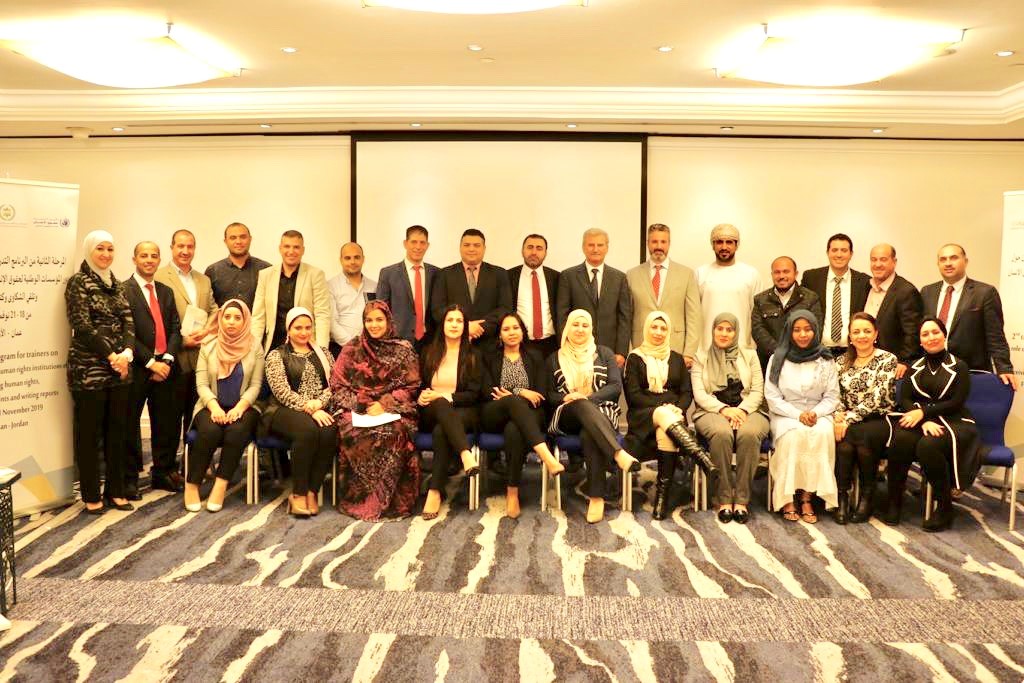
In cooperation with the National Centre for Human Rights in Jordan, ANNHRIs and the United Nations Centre for Training and Documentation in Human Rights for Southwest Asia and the Arab Region organized the second phase of the training – trainers program for national human rights institutions. The program focused on the role of national human rights institutions in monitoring and receiving Complaints, fact-finding missions and writing reports. This training will be held in Jordan from 18 to 21 November 2019.
This session came in the context of continued cooperation between ANNHRIs and the United Nations Centre for Training and Documentation. The cooperation in the Field of Human Rights for Southwest Asia and the Arab Region to develop the capabilities of national human rights institutions members of the network, and to complete the first phase of the training trainers program that was organized in Sudan in 2017.
The training course was attended by representatives of national human rights institutions from 8 Arab countries (Jordan, Algeria, Sudan, Sultanate of Oman, Palestine, Egypt, Mauritania and Morocco).
This stage of the training program has achieved a number of important goals. These goals Included Exposure of the significance of the mandate entrusted to national human rights institutions to monitor and document human rights violations, and to receive and examine complaints about them. It also monitored the compatibility of national legislation with international standards.
The course also addressed the main principles and international standards for information collecting, monitoring, documentation and reporting on the human rights situation, basic elements of fact-finding and evidence collection including interviewing, visiting places of detention, observing trials and administering justice.
Participants from the national human rights institutions in the Arab countries reported that they benefited from this phase of training trainers program. The benefit came mainly from the program’s focus on dealing with issues at the very heart of national human rights institutions action. They also praised the opportunity provided by the training to exchange experiences and best practices among participants, who mostly come from a human rights, professional and legal background, as their participation was based on the criteria established for the target group of cadres of national human rights institutions that are members of the Arab Network.
The training team consisted of a group of expert staff of the national institutions members of the Arab Network, and experts from OHCHR. At the end of the training program, certificates were handed out to the participants.
It is worth noting that national human rights institutions that comply with the principles relating to the status of national institutions known as the Paris Principles, play a crucial role in promoting and monitoring the effective implementation of international human rights standards at the national level. Likewise, the promotion and protection of human rights in many areas including: combating and preventing torture, degrading treatment, summary executions, arbitrary detention and disappearances, the protection of human rights defenders, and the protection of economic, social and cultural rights. National human rights institutions also hold a pivotal role in promoting and protecting the rights of women and some other groups, such as children, migrants, refugees, and internally displaced persons.