Login
Signup
News
ANNHRI is organizing its twentieth General Assembly and annual conference under the theme “National Human Rights Institutions Established in Accordance with Paris Principles: Roles, Challenges, Visions, and Aspirations” in Cairo.
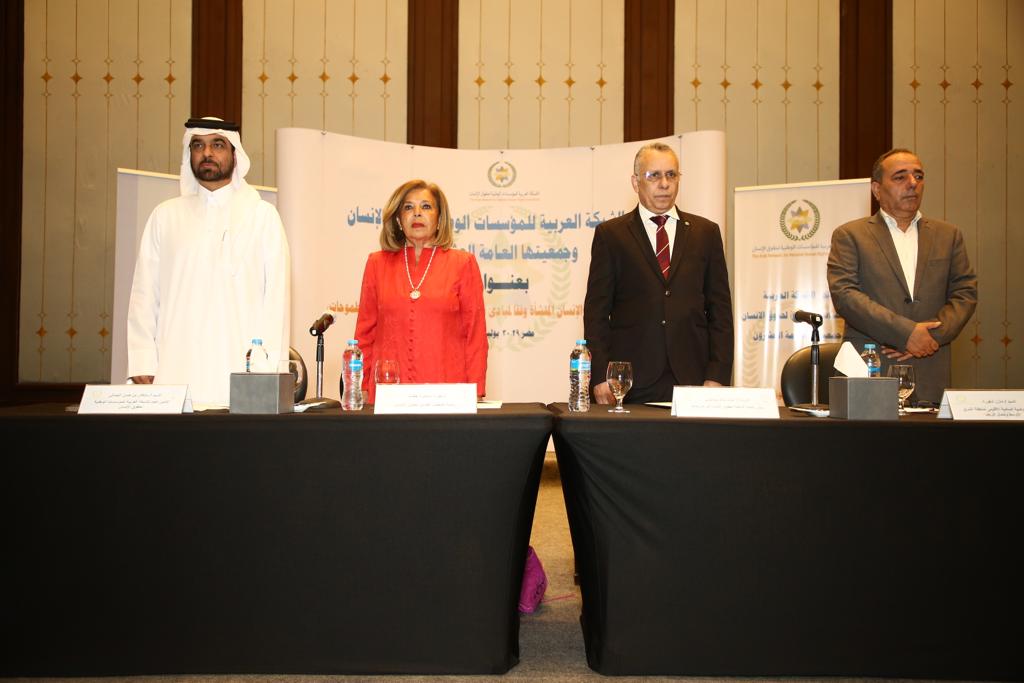
On the sidelines of its twentieth General Assembly in Cairo, the International Annual Conference of ANNHRI on the Challenges and Needs of National Human Rights Institutions has commenced.
Moushira Khattab: “the significant efforts made by ANNHRI’s Secretariat to build capacities with member national institutions.”
Al-Jamali: “We believe in the universality and unity of the human rights movement, based on integration and away from competition.”
Bouhabini: “National institutions need governments that understand their importance and grant them the absolute right to advance the field of human rights.”
Cairo: July 29, 2023
Today, in the Egyptian capital Cairo, the annual international conference of the Arab Network for National Human Rights Institutions, based in Doha, under the theme “National Human Rights Institutions Established in Accordance with Paris Principles: Roles, Challenges, Visions, and Aspirations,” kicked off. This event is being held on the sidelines of the Network’s twentieth General Assembly and is attended by a wide range of participants, including representatives from the National Human Rights Committee of Qatar, as well as 330 individuals representing 65 international and regional organizations, national institutions, governmental representatives, and civil society organizations. These include stakeholders, experts, and consultants. The conference focuses on the challenges, needs of national human rights institutions, and aims to exchange best practices to enhance and guide the programs of ANNHRI in line with the aspirations of its member institutions and the expected role at the national and international levels in promoting and protecting human rights.
Her Excellency Ambassador Moushira Khattab, Chairperson of the National Council for Human Rights in Egypt, who assumed the presidency of the ANNHRI in its twentieth session, stated, “This edition comes at a very important time as it coincides with the 75th anniversary of the Universal Declaration of Human Rights and the thirtieth anniversary of Paris Principles organizing the work of national human rights institutions.” She added, “It is a great honour for Egypt to host the twentieth General Assembly of the ANNHRI, which works for a noble cause aimed at achieving peace, security, justice, and prosperity for every citizen in the Arab world without discrimination.” She praised the significant role of the National Human Rights Committee of Qatar in hosting the ANNHRI’s General Secretariat, along with the great efforts made by the Secretariat to contribute to the exchange of experiences and capacity building with member national institutions of the Network.
On his part, His Excellency Mr. Sultan bin Hassan Al-Jamali, the Secretary-General of the ANNHRI, stated that: the network is accustomed to having each of its General Assembly meetings address a topic related to human rights or one of the priority issues that reflect the interest of the ANNHRI’s member national institutions. He pointed out that this conference addresses the challenges and needs, as well as the exchange of lessons and best practices, which will contribute to guiding and developing the network’s programs in line with the aspirations of the member institutions. It also reflects the expected role at the national and international levels in promoting the universality and unity of the human rights journey. He emphasized the importance of opening up avenues for cooperation, overcoming obstacles and challenges, and enhancing cooperation with the Global Alliance, the Sub-Committee on Accreditation, the High Commissioner for Human Rights, and other international and governmental entities. Additionally, he highlighted the importance of coordinating and cooperating with unions, federations, national, regional, and international civil society organizations.
Al-Jamali affirmed the ANNHRI’s continued dynamic work through its collaboration with partners, and its belief in the universality and unity of the human rights journey, relying on integration and staying away from competition. This approach will allow for the prioritized coverage of most of the needs of member institutions, at both the national and regional levels. He stated, “We seek, through the programs of the ANNHRI, to develop by enhancing cooperation with network partners who are stakeholders. We also aim to expand the scope of the target group for network events and activities, especially training, to include a wider range of members of civil society organizations and governments. This is within the framework of implementing the network’s programs arising from the operational plan of the strategic network plan and the recommendations of its general assemblies.”
Al-Jamali emphasized that since its inception, the programs of the ANNHRI have diversified and covered many human rights issues, including freedom of opinion and expression, combating hate speech and extremism, security approaches, human rights, and codes of conduct for public security personnel, as well as combating torture, discrimination, racism, and human rights violations. The network has also worked on integrating human rights concepts into education, and public policies, and promoting democracy by enabling national institutions to monitor human rights during the electoral process. He added, “The Arab Network has also worked to enhance the capacities of institutions in the field of promotion and protection, through evidence and cooperation in organizing educational seminars, conferences, and cooperation with the international human rights system. It has also built and enhanced capacities in the core tasks of protection institutions, including receiving and following up on complaints, monitoring, visiting places of detention, fact-finding, preparing reports, and interacting with national, regional, and international human rights mechanisms, both contractual and non-contractual.” The network has also provided consultations and supported emerging institutions at all levels, and worked to urge sovereign entities in countries to make their national human rights institutions more compatible with Paris Principles of 1993 and the General Comments of the Sub-Committee on Accreditation of the Global Alliance of National Human Rights Institutions.
Ahmed Salem Bouhabini, the President of the National Human Rights Commission in Mauritania and the former President of the ANNHRI, stated that national human rights institutions are tasked with playing important roles, yet they face significant challenges in doing so. He pointed out that these institutions in many Arab countries need governments that understand their importance and grant them the absolute right to fully perform these roles in order to provide the necessary insights for the advancement of human rights.
In the same context, Mazen Shaqoura, the Representative of the Regional Office for the Middle East and North Africa at the UN High Commissioner for Human Rights, considered the adoption of Paris Principles and the subsequent establishment of national human rights institutions as hybrid institutions between the state and civil society as one of the important achievements for protecting, promoting, and enhancing human rights at the national levels. He noted that national institutions have formed an important source alongside other national structures such as parliament, judiciary, unions, and civil society organizations. Shaqoura said, “Over time since 1993, the scope of work has expanded, and national bodies have proved tangible in many contexts to surpass the general framework and standards set forth in the Paris Principles, to the point where we are now living what could later be described as post-Paris standards.” He also highlighted the important role of regional institutions in achieving sustainable development goals through contributing to national dialogues, exchanging experiences, and emphasizing the importance of a human rights approach in all activities, whether in policy-making, planning, or implementation.
The participants in the annual international conference of the Arab Network for National Human Rights Institutions, held under the theme “National Human Rights Institutions Established in Accordance with Paris Principles: Roles, Challenges, Visions, and Aspirations” on the sidelines of the 20th General Assembly in Cairo, recommended continuing to support the Independent Commission for Human Rights in Palestine to confront the ongoing and serious violations by the Zionist entity and its occupying authorities against the Arab Palestinian people. The ANNHRI also expressed a special interest in enhancing the capacities of national human rights institutions in the field of human rights education and the rights of marginalized groups, integrating human rights principles into educational curricula, and combating hate speech.
At the conclusion of the conference, His Excellency Sultan bin Hassan Al-Jamali, the Secretary-General of the ANNHRI, read out the recommendations of the more than 300 participants in the opening session of the conference, including representatives from national human rights institutions in the Arab region, international and regional organizations, governmental institutions, ministers, parliamentarians, civil society organizations, experts, activists, as well as partners of the ANNHRI from the UN High Commissioner for Human Rights, UNDP, the General Secretariat of the League of Arab States, the Arab Commission for Human Rights, the Arab Institute for Human Rights, and the Global Alliance of National Human Rights Institutions.
The conference called for the ANNHRI to continue its programs to enhance the capacities of national institutions by interacting with the enhancement of the interaction of national institutions with treaty bodies and facilitating the participation of these institutions in treaty body reviews and meetings. Additionally, it called for greater engagement of the Arab Network with member institutions in implementing institutional programs to promote a culture of human rights awareness and education at both the governmental and popular levels, empowering and supporting institutions in this context, and promoting human rights education and investment in education. The conference also called for the continued work to enhance the independence of national human rights institutions in law and practice, and for institutions to preserve and adhere to aspects of independence. Furthermore, the conference recommended that the ANNHRI continue to collaborate with national human rights institutions of member states to promote a culture of human rights and deepen understanding of the nature and roles of national institutions, organize regular visits to relevant authorities to enhance the independence of national institutions and provide them with adequate financial support to enable them to fulfil their mandates and protect and promote human rights in their countries. It also recommended organizing consultations to propose ways and means to provide adequate support to the Sub-Committee on Accreditation to ensure the enhancement of the logistical and financial capacity of the Secretariat of the UN High Commissioner for Human Rights to provide the required services appropriately. The participants also recommended the importance of continuing to cooperate with the UN High Commissioner for Human Rights to enhance and build the capacity of national institutions, including preparing for the various stages of the accreditation process and implementing the recommendations of the Sub-Committee on Accreditation under the Global Alliance of National Human Rights Institutions. They also called for expanding the framework of the network’s cooperation with stakeholders to provide broader perspectives for the interaction of national institutions with the international human rights system and to support the network’s awareness programs and capacity-building. They also recommended that institutions contribute to part of the costs of the network’s activities organized in their countries, according to their capabilities.
The international conference called for enhancing the exchange of experiences and best practices, collecting them with evidence by topic to facilitate their exchange and access, and using them as reference materials in the network’s programs. It also called for providing the necessary support to human rights institutions to enable them to play an active role in training and capacity-building for law enforcement officials on codes of conduct and relevant human rights standards. Additionally, it urged framing cooperation with Arab parliaments to achieve alignment between national legislation and international human rights standards, and to remove conflicts between national legislation and treaties to which member states have acceded or ratified. The participants emphasized the importance of the ANNHRI focusing on enhancing the capacities of national human rights institutions in the field of human rights education and the rights of marginalized groups, integrating human rights principles into educational curricula, and combating hate speech. National human rights institutions were urged to enhance the role of civil society organizations and human rights defenders to contribute to the advancement of the human rights system as a whole. Furthermore, they called for continued support to the Independent Commission for Human Rights in Palestine to confront the ongoing and serious violations by the Zionist entity and its occupying authorities against the Arab Palestinian people. They also called for providing technical, scientific, logistical, and material support to emerging institutions or those facing exceptional circumstances according to the needs of these institutions. Moreover, the conference recommended directing national human rights institutions to strategically benefit from the accreditation process to enhance their position at the national level by monitoring the implementation of the recommendations of the accreditation committee with relevant national bodies, especially parliaments. It also called for leveraging the experience, advice, and support of the Arab Network for National Human Rights Institutions, relevant regional networks, the Global Alliance of National Human Rights Institutions, and the UN High Commissioner for Human Rights in the accreditation field.
The executive committee of the Arab Network for National Human Rights Institutions convened its first meeting for the year 2023, chaired by Her Excellency Dr. Moushira Khattab, President of the Arab Network in its twentieth – new – term. The meeting was attended by the national member institutions from Qatar – the headquarters country – Iraq, Egypt, Tunisia, Bahrain, and Palestine. The committee reviewed the outcomes of its recent meeting in Mauritania and the twentieth General Assembly, in addition to discussing the latest developments in the Palestinian issue and the Arab Network’s plans to support the Independent Commission for Human Rights in Palestine. Furthermore, the meeting discussed supporting national institutions in the accreditation process and the institutions that will undergo accreditation by the Global Alliance of National Human Rights Institutions next October, as well as reviewing the two emerging institutions in Kuwait and Lebanon and the latest developments in the National Human Rights Commission in Sudan and the High Commission for Human Rights in Iraq.