Login
Signup
News
ANNHRI held regional Workshop on Spreading Human Rights culture as Part of Sustainable Development Goals
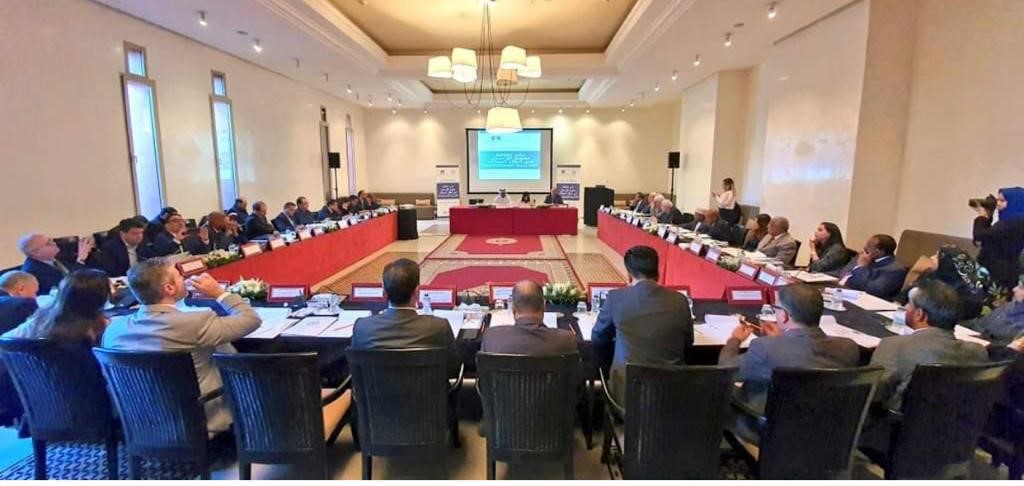
Marrakech on 4th of February 2020
In cooperation with the National Human Rights Council (CNDH) in the Kingdom of Morocco, the Arab Network for National Human Rights Institutions (ANNHRI) held a high-level regional workshop on “Spreading Human Rights Culture as Part of Sustainable Development Goals” in the city of Marrakech, during the period from 4 to 5 February 2020. The workshop was organized within the framework of the recommendations of the General Assembly of the Network related to the organization of meetings and workshops to discuss sustainable development goals, cooperation with institutions and agencies concerned with statistics, and development of tools and methodologies used in order to achieve accurate indicators on a periodic basis.
Opening remarks at the regional workshop were delivered by Mr. Issam Younis, Chairman of ANNHRI, Mr. Sultan bin Hassan Al Jamali, ANNHRI Executive Director and Mrs. Amina Bouayach, Chairperson of the CNDH in Morocco, the hosting country. The workshop aimed at sharing experiences, best practices and learned lessons in respect of performing tasks related to spreading the culture of human rights by the Arab national human rights institutions. Additionally, it identified challenges that could be faced by national institutions while performing these tasks in various areas, as well as experiences and capabilities available in each institution and opportunities existing in each country. Moreover, it proposed means, tools and solutions that can be used to overcome these challenges, and it examined areas of cooperation between Arab institutions, the Global Alliance of National Human Rights Institutions (GANHRI), partners of the Arab Network and all stakeholders.
The first session of the workshop was presided by Mr. Issam Younis, ANNHRI Chairman, as it tackled “Global general framework of sustainable development goals and spread of the culture of human rights”. During the session, working papers were reviewed after being presented by Mr. Mohamed Al Nsour, Head of the Middle East and North Africa Division of the High Commissioner for Human Rights Office, Mr. Akram Khalifa, representative of the Economic and Social Commission for Western Asia (ESCWA), the High Commissioner for Planning and the National Human Rights Council in Morocco, as well as representing the Arab Network for Institutions.
Mr. Sultan bin Hassan Al Jammali, ANNHRI Executive Director chaired the second session, titled “Role of National Human Rights Institutions: Experiences, Best Practices, and Lessons Learned”. During the session, experiences of the National Human Rights Council in Morocco and the National Human Rights Council in Algeria were reviewed in addition to experiences of the National Centre for Human Rights in Jordan and the National Council for Human Rights in Egypt.
Third session titled “Cooperation frameworks of the Arab Network Partners regarding Implementation of Member institutions Programs at Country Level”, was presided by Mr. Aqeel Jassim Al-Musawi, Head of Iraqi High Commission for Human Rights. The session covered a group of working papers presented by Mr. Abdul Salam Said Ahmed, Head of the Centre of the United Nations Human Rights Training and Documentation Centre for South-West Asia and the Arab Region, Mr. Abdelbasset Ben Hassen, President of the Arab Institute for Human Rights “Tunisia”, Mr. Akram Khalifa, representative of the ESCWA and Mrs. Mais Al-Attiyat, representative of the United Nations Development Program, Electoral Working Group.
Mr. Mohamed El Nsour, head of the Middle East and North Africa Office of the Office of the High Commissioner for Human Rights (OHCHR) chaired the fourth session, which was entitled: “Demonstration of challenges and needs in general according to priorities, spread of human rights culture, implementation and follow up on sustainable development goals, while specifying the programs the Network will implement at country level in participation with member institutions.” Experiences of 14 national institutions were reviewed during the session, mainly: the National Human Rights Commission in the Comoros, the National Human Rights Council in Morocco, the National Centre for Human Rights in Jordan, Oman Human Rights Commission, the National Human Rights Committee in Qatar, the National Commission of Human Rights in Djibouti, the Palestinian Independent Commission For Human Rights, the Iraqi High Commission For Human Rights, the National Human Rights Council in Algeria, the Sudanese National Human Rights Commission, the High Commission for Human Rights in Tunisia, the National Commission for Human Rights in Lebanon, the National Council for Human Rights in Egypt, and the National Commission on Human Rights in Mauritania.
The workshop was concluded with a fifth session, during which the final document of the workshop was presented and discussed.
It should be mentioned that the workshop followed many events organized by the network in this context, most recently the international conference held on the 26th and 27th of June 2019, in Sharm El Sheikh, which came out with important recommendations, directed at governments, national institutions, the Arab Network for National Institutions, and the international community, with the aim to achieve sustainable development goals.