Login
Signup
News
The Arab Network for National Human Rights Institutions organizes the 4th Mohamed Fayek Course in the Egyptian capital, Cairo.
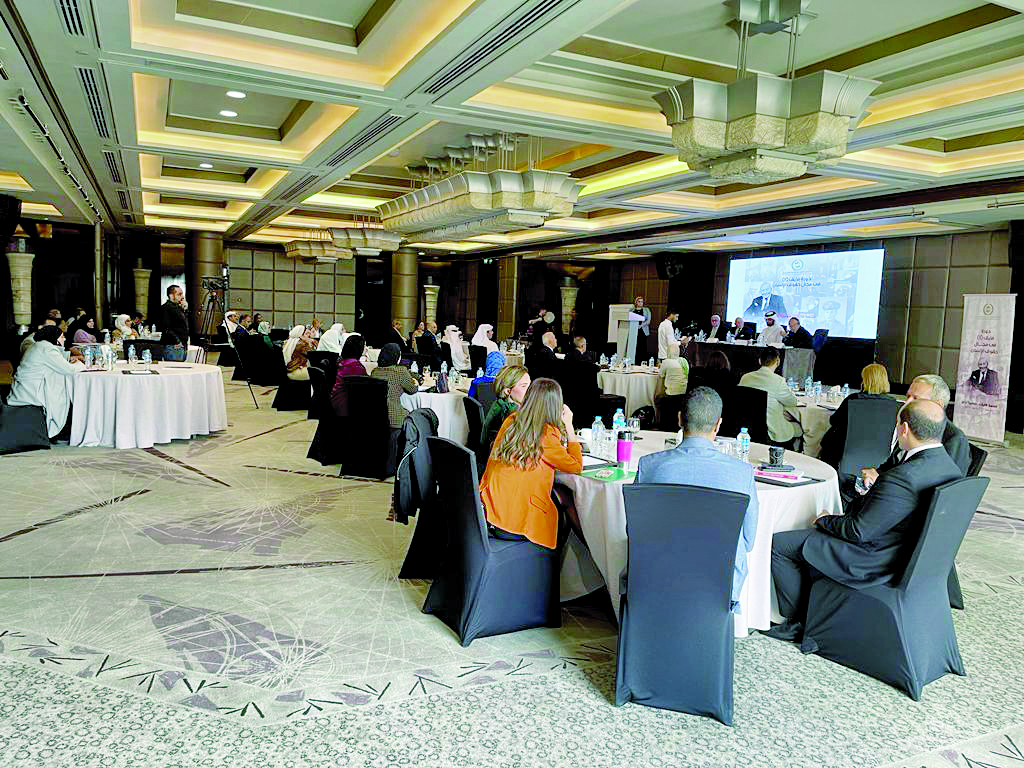
The Arab Network for National Human Rights Institutions, based in Doha, continued its movements and efforts to stop the Israeli aggression and hold it accountable for its crimes in its war on Gaza, ensuring the entry of humanitarian aid, preventing the forced displacement of the Palestinian people from Gaza, and exposing Israeli violations of international humanitarian law, international law, and international human rights law. His Excellency Mr. Sultan bin Hassan Al-Jamali, Secretary-General of the ANNHRI, called for a reassessment of the international human rights system and the development of tools that can unite all human rights activists worldwide to enforce the application of human rights principles on everyone without discrimination. He called for the implementation and follow-up of the recommendations of the Arab Network’s Emergency General Assembly held last October regarding the cessation of aggression on Gaza and solidarity with the Palestinian people.
This came during Al-Jamali’s opening speech in the Egyptian capital, Cairo, during the organization of the ANNHRI’s 4th Mohamed Fayek Course, where he presented its movements to thwart the Israeli occupation’s plans to liquidate the Palestinian cause and ensure the Arab Palestinian people’s right to self-determination, the liberation of Palestine, and the establishment of its independent state with its capital in Jerusalem. Al-Jamali said: In these difficult, dangerous, and sensitive circumstances facing our Arab nation, with the unprecedented barbaric aggression on Gaza and the exposure of the hideous face of the West, its agreement to a genocide in Gaza witnessed by the world, pretending to uphold the values and principles they have claimed for decades, disregarding all the appeals from countries and peoples, including their own peoples, to stop this barbaric aggression, without any response to these demands, even minimally. Therefore, we must stop to reassess the international human rights system and find our own tools to resist this Western arrogance and its overwhelming power, united in one trench with all human rights activists worldwide, to enforce the application of human rights principles on everyone without discrimination, and to deepen thinking to propose new and innovative tools to support the human rights march, in addition to working to bring activists closer together and unify their efforts and advocacy for each other to achieve the premise of sound logic.
A Brutal War
Mr. Mohammed Fayek, the dean of the Arab Network, said: “We have watched with all the pain and sadness the brutal and retaliatory war and collective punishment against the Palestinian people in Gaza, which is considered a war of extermination that has been completed by killing innocent civilians, including women and children, and bombing civilian areas such as hospitals, schools, and shelters, in addition to forced displacement of Palestinians from Gaza. He added: “It has become clear that Israeli leaders have deliberately committed the four crimes stipulated in international criminal law, noting that the greatest shock was what the world witnessed from most Western countries and the United States rushing to give Israel the green light to continue its war, described as insane, using blatant lies about Israel’s right to self-defence.” He said: “In addition, what shocked the world is the use of the veto in the United Nations Security Council to prevent any decision to cease-fire.”
Fayek added: “But we must not be distracted from serving human rights causes by these sad scenes in which most Western countries have turned away from their humanitarian values. Rather, we must adhere to them more firmly because we want them for ourselves and for our peoples, for sustainable development, combating poverty and disease. At the same time, we must not forget the need to hold accountable those responsible in the Israeli leadership and non-Israelis involved in the war crimes and massacres in Gaza.”
In the context of the Mohammed Fayek Course, Ambassador Mahmoud Karem, Vice President of the National Council for Human Rights, emphasized the importance of Mohammed Fayek’s regional Course, considering it the basis for work in the field of human rights in terms of its implementation by specialists and experts internationally recognized for their competence, skill, and work. He said: “The importance of this course comes from its topics, which include defining human rights in terms of their origin, development, characteristics, and the role of national, regional, and international institutions in light of their work according to the Paris Principles, training on contractual and non-contractual mechanisms, preparing reports, and monitoring and documenting human rights situations in the Arab region.”