Login
Signup
News
The Arab Network for National Human Rights Institutions met with Mr. Volker Türk, the High Commissioner for Human Rights, today at the Commission’s headquarters in Geneva to discuss responses to developments in Gaza.
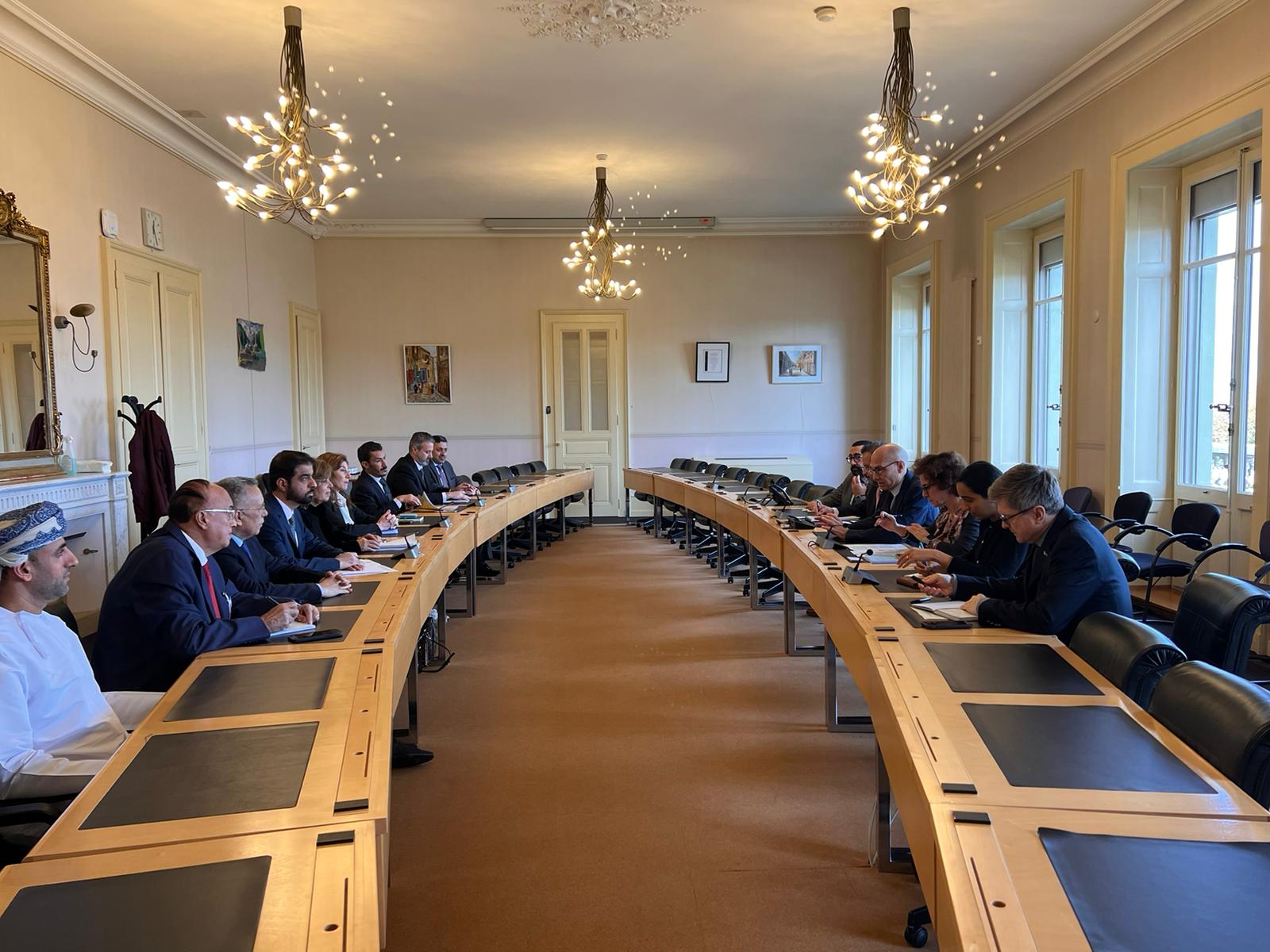
On November 15, 2023, the High Commissioner for Human Rights, Mr. Volker Türk, received a delegation from the Arab Network for National Human Rights Institutions at the Commission’s headquarters in Geneva. The delegation was headed by Ambassador Dr. Moushira Khattab, President of the Network and President of the National Human Rights Council, and Mr. Sultan Al-Jamali, Secretary-General of the Network and Secretary-General of the National Human Rights Committee in Qatar, to discuss responses to developments in Gaza.
At the beginning of the meeting, Ambassador Dr. Moushira Khattab, the President of the Arab Network, expressed her thanks to Mr. Volker Türk for agreeing to receive the Arab Network delegation amidst the current international tension and for his visit to the region and meetings with officials. She emphasized that this meeting is taking place at a critical time for human rights internationally, as millions in Gaza and other areas face horrific challenges. She stressed the urgent need for cooperation to end violence and ensure unrestricted access to affected areas. She also emphasized the importance of promoting and protecting human rights for all equally.
On the other hand, Mr. Sultan Al-Jamali, the Secretary-General of the Arab Network, referred to the High Commissioner’s positions, which called for an investigation into the intensive Israeli airstrikes with highly explosive munitions in densely populated areas. He also called for immediate protection for Palestinians in the West Bank by the Israeli occupation, and for countering hate speech and incitement against Palestinians. He called for an immediate cessation of fire in Gaza and Israeli attacks on hospitals in Gaza and surrounding areas. In the context of current developments, Al-Jamali appealed to the High Commissioner for Human Rights for urgent cooperation with all concerned parties and exertion of strong pressure, given its prominent role as a specialized agency within the United Nations to promote and protect human rights. The aim is to achieve: an immediate cessation of the aggression on the Gaza Strip, contribute to holding Israeli war criminals accountable, reaffirm the commitment of the Israeli occupying authority to international law, and collaborate in creating safe passages for the entry of relief agencies and their workers, as well as an immediate cessation of serious violations in the West Bank. Additionally, cooperation is sought to update the list of companies involved in building illegal settlements, in accordance with the Human Rights Council resolution. Mr. Sultan Al-Jamali handed over a letter to the High Commissioner containing the demands of the Arab Network for National Human Rights Institutions regarding the situation in Gaza and occupied Palestine.
Mr. Ahmed Salem Bouhabini, President of the National Human Rights Commission in Mauritania, emphasized that the Arab national human rights institutions represented in this meeting hope that the United Nations system will act responsibly. He clarified that all citizens have the right to enjoy their basic rights equally. He noted that what is happening today in Gaza is likely to affect the credibility of the international human rights movement, which is based on international law that must be strictly applied to everyone under the same circumstances.
Professor Samar Al-Hajj Hassan, Samar Al-Haj Hassan, Chairperson of the Board of Trustees of the National Center for Human Rights in the Hashemite Kingdom of Jordan, affirmed that the United Nations was founded to achieve peace, justice, and defend human rights. She stated that national human rights institutions work closely with the Office of the High Commissioner for Human Rights to defend the universal and humanitarian principles of human rights. She pointed out that statements and condemnations alone are not enough from UN institutions, and that pressure must be exerted on states to stop this aggression and the crimes committed by Israel, which constitute a blatant violation of all human rights charters.
On his part, Mr. Monir Ben Saleh, Secretary-General of the National Human Rights Council in the Kingdom of Morocco, expressed his gratitude to the High Commissioner for Human Rights for receiving the Arab Network delegation. Ben Saleh confirmed to the High Commissioner that the Arab Network and national human rights institutions, especially those accredited with “A” status, remain at his disposal as part of the United Nations human rights system under his leadership. In this regard, he stated that the Palestinian national institution will share its reports on current violations through the network. He expressed his support and solidarity with the Independent Commission for Human Rights in Palestine, noting the significant pressure faced by its members and staff. He called on the Office of the High Commissioner for Human Rights, as defenders of human rights, to protect human rights equally for all.
Ambassador Mahmoud Karem, Vice President of the National Council for Human Rights in Egypt, stressed the importance of the current Arab public opinion, which is living and affected by the oppressive and painful circumstances experienced by the Palestinian people in Gaza, including civilian casualties and inhuman Israeli practices. He called on the international community and the High Commissioner for Human Rights to stop and condemn this killing, collective punishment, and forced displacement that contradict the provisions of international law and international humanitarian law. He clarified that the successive Israeli acts of aggression and the destruction of Gaza constitute a clear violation of the purposes of the United Nations Charter, international legitimacy, and UN resolutions. He pointed out the double standards that are evident to every Arab citizen, where they witness what some countries call for in terms of implementation in Ukraine, while completely ignoring it in Gaza. He emphasized that there is no way other than to stop military operations and Israeli aggression and ensure the security of the Palestinian people and the entry of humanitarian aid. Ambassador Karem also expressed his regret for what is happening in our Arab region and the Palestinian territories, which are turning into experimental grounds for some countries’ deadly new weapons, which are approaching weapons of mass destruction.
Dr. Saleh Hamad Al-Barwashi, a member of the Omani Committee for Human Rights, thanked the High Commissioner for Human Rights for allowing the meeting with the Arab Network delegation. He expressed his support for all the points raised by the delegation and for its letter to the High Commissioner.
Several members of the Arab Network delegation for national human rights institutions emphasized that the High Commissioner for Human Rights is considered the guardian of human rights, expecting him to fulfil this role more effectively in line with the facts in the reports of the High Commissioner’s Office regarding violations in Gaza. They also emphasized the importance and impact of statements and positions issued by those responsible for protecting and promoting human rights within the United Nations system, particularly the High Commissioner for Human Rights, as the first defender of human rights—a position that the Arab national human rights institutions support and are ready to cooperate with, particularly the Independent Commission for Human Rights in Palestine, in its struggle and advocacy for ending the aggression on Gaza and all Palestinian territories under occupation. They hoped for a more stringent stance from the Office of the High Commissioner regarding human rights violations in Gaza, based solely on human rights considerations.
On his part, the United Nations High Commissioner for Human Rights, Mr. Volker Türk, expressed his appreciation for the vital work carried out by national human rights institutions and the Arab Network of National Human Rights Institutions. He stressed that the situation requires an immediate cessation of violence, granting the United Nations and other entities unrestricted access to conflict areas. He emphasized the importance of influencing public opinion through media and platforms that can make a difference.
He emphasized the importance of shared responsibility, stressing that this responsibility transcends political boundaries, requiring unified efforts to end violence quickly and to advocate for the rights, security, and safety of all affected individuals.