Login
Signup
News
ANNHRI is organizing the second Arab conference for national institutions and Arab interior ministries in the Egyptian capital, Cairo.
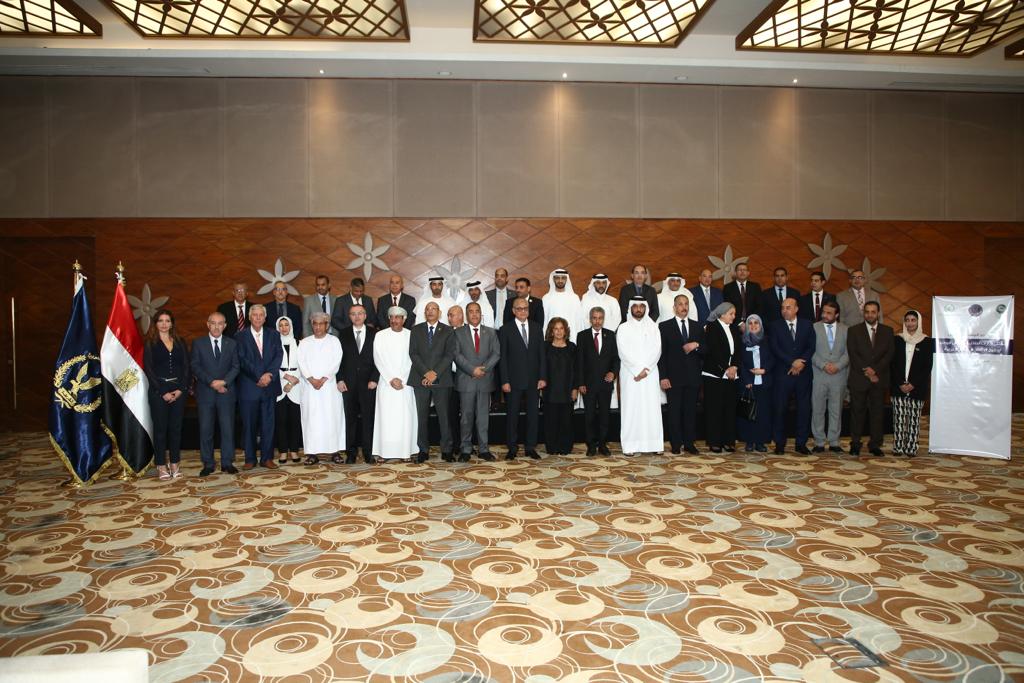
Conference participants observed a minute of silence for the victims of the floods in Libya and the earthquake in Morocco.
Al-Jamali: “There is a need to create an atmosphere of integration between national human rights institutions and security institutions.”
We strive to enhance security work based on a foundation of human rights.
Kuman: “Arab evidence against torture and model procedures for protecting victims and witnesses in human rights violation cases.”
Al-Swaifi: “Security and human rights are interconnected and cannot be separated.”
Moushira Khattab: “The rule of law and the protection of human rights are two sides of the same coin.”
Cairo: September 29, 2023
The Arab Network for National Human Rights Institutions organized the second Arab conference on “Prospects for Cooperation in Protecting and Promoting Human Rights between Ministries of Interior and National Human Rights Institutions in the Arab Region: Best Practices, Challenges, and Cooperation Visions” in the Egyptian capital, Cairo. The conference was held in partnership with the Ministry of Interior of the Arab Republic of Egypt and the General Secretariat of the Council of Arab Interior Ministers, with the attendance of representatives from Arab interior ministries, representatives of national human rights institutions in Arab countries, the President and members of the Arab Human Rights Committee, along with a number of specialized experts from the General Secretariat of the Arab League. The conference, held on September 19 and 20, 2023, discusses the results of implementing the recommendations of the first joint conference for representatives of interior ministries and national human rights institutions in Arab countries. It also examines the extent to which Arab countries have implemented the recommendations of the Arab Human Rights Committee’s Charter Mechanism, in addition to the efforts of Arab interior ministries to enforce human rights in the security field and the outcomes of Arab and international meetings on security and human rights. Moreover, it discusses the experiences of national human rights institutions in Arab countries in cooperation with security institutions, visiting detention facilities, and the challenges of security and human rights in the field of asylum and migration. The opening speeches offered condolences to the victims of the earthquake in Morocco and the floods in Libya, with conference participants observing a minute of silence in their memory.
Cooperation, Strengthening, and Protection
In his opening remarks at the conference, His Excellency Mr. Sultan bin Hassan Al-Jamali, the Secretary-General of the Arab Network for National Human Rights Institutions, affirmed that cooperation between national institutions and the General Secretariat of the Arab Council of Ministers of Interior will have a direct impact on enhancing and protecting human rights in Arab countries. This will establish a roadmap and foundations for cooperation between national human rights institutions and their countries’ ministries of interior to enhance awareness, education, and training to integrate human rights concepts into police work. It also includes cooperation in monitoring violations, combating them, and promoting and protecting rights to preserve human dignity.
He added: To achieve our goals, it is necessary to work towards all the objectives of Goal 16 of the Sustainable Development Goals, to establish strong, effective, transparent, and accountable institutions, ensure public access to information, and in accordance with national legislation and international agreements, prevent violence and torture, promote the rule of law and equal access to justice, combat all forms of crime including human trafficking, corruption, bribery, and reduce the flow of illicit funds, and ensure the protection of rights and freedoms. He emphasized the importance of stakeholders’ cooperation to create genuine political will for the presence of effective and accountable government administrations to address the root causes of the challenges hindering this, and to enhance the space available for civil society to transition to fair, peaceful, and inclusive societies, and urged governments to enhance the democratic situation, freedom of opinion and expression, and the fight against torture and its prevention.
Respecting human rights, no matter how grave the crime
Dr. Mohammed bin Ali Kuman, Secretary-General of the Council of Arab Ministers of Interior at the Arab League, stated during the opening of the conference that the primary goal of the Council within the Arab League is to enhance cooperation among Arab countries in the field of internal security and crime prevention. Since the Council’s inception in the early 1980s, it has placed achieving security not in conflict with respecting human rights, but rather as complementary, with each reinforcing the other. Security, in itself, is a fundamental right that is inseparable from other rights. The Council has continuously emphasized strengthening human rights by consistently including it as a permanent agenda item in its annual conferences for Arab police and security leaders. He emphasized that this approach to respecting human rights has always been a fundamental determinant of the Council’s approach to combating crime, no matter how serious the threat, even during the darkest periods of terrorist acts in Arab countries.
Kuman explained that the General Secretariat of the Council of Arab Interior Ministers has sought to cooperate with various Arab and international bodies that contribute to enhancing human rights alongside security efforts. He mentioned the General Secretariat’s participation in the international conference organized by the National Human Rights Committee in Qatar in 2014 in partnership with the Arab Network for National Human Rights Institutions based in Doha, on the challenges of security and human rights in the Arab region. Kuman also revealed the outcomes of the meeting between the General Secretariat of the Council and the Arab Permanent Committee for Human Rights at the Arab League, where they agreed to consider developing an Arab guide to combat torture and an Arab guide to model procedures for protecting victims and witnesses in human rights violations cases.
Developing laws, policies, and positions
In the same context, Major General Dr. Omar Al-Swaifi, Assistant Minister of Interior for Human Rights Affairs in the Arab Republic of Egypt, stated that it has become widely recognized in the international community that human rights and their preservation are essential for building a just and equal society that enjoys freedom, dignity, and development. Al-Swaifi pointed out that national human rights institutions play a fundamental role in consolidating and strengthening human rights, as well as in developing laws, policies, and positions that help create a conducive environment for growth and enhance rights and freedoms. They also play a crucial role in monitoring human rights situations within countries and the measures taken in this regard. Additionally, their highly important role aims to spread a culture of human rights within the country through implementing educational and enlightening programs for citizens everywhere. He emphasized that the work of interior ministries complements that of national human rights institutions, considering security and human rights as integrated components that cannot be separated from each other.
Two sides of the same principle
In this regard, Dr. Moushira Khattab, President of the National Council for Human Rights in the Arab Republic of Egypt, considered that the rule of law and the protection of human rights are two sides of the same principle, which is the freedom to live with dignity. She said, “All countries of the world have recognized this fundamental relationship since the adoption of the Universal Declaration of Human Rights, which stated that it is necessary to protect human rights with the rule of law.” She added, “In the Millennium Declaration, member states agreed to spare no effort in promoting the rule of law and respecting all internationally recognized human rights and fundamental freedoms.” This includes measures such as ratifying international human rights treaties, not entering reservations that empty the treaty of its content, developing national plans, and allocating sufficient resources to enforce human rights and ensure their effective enjoyment, as well as monitoring implementation by listening to rights holders and ensuring easy access to effective justice. This is done in cooperation with civil society and the international community.
The participants also concluded with a number of recommendations, including continuing to work on enhancing the understanding that the role of security goes beyond its traditional duties to achieve the protection of public security. They emphasized the need for security work to include the protection of the enjoyment of rights and public freedoms, in addition to enhancing accountability mechanisms, respecting the rule of law, and providing a decent life for those working in the security field to ensure their ability to perform their duties efficiently and contribute to the promotion of awareness through social media and all media to demonstrate the role of the security element in law enforcement, maintaining security, protecting human rights, and preserving human dignity, and defining the citizen’s understanding of the rights and duties syndrome according to the law. The conference participants agreed that it is the state’s responsibility to enforce the law within its territories and to deal decisively with various crimes, especially terrorism and organized crime, according to human rights approaches. They praised the cooperation between national human rights institutions and Arab interior ministries, as well as the coordination between the General Secretariat of the Arab Interior Ministers Council and the General Secretariat of the Arab Network for National Human Rights Institutions. They also emphasized the use of technology to monitor public affairs by citizens, residents, and security elements. Additionally, they stressed the importance of developing programs to counter hate speech, discrimination, extremism, and exclusion, and to contribute to the crystallization and development of national plans to combat violent extremism. They affirmed the content of Sustainable Development Goal 16 as a key to implementing these goals in a way that supports social peace. Furthermore, they highlighted the importance of verifying sources and the accuracy of information regarding human rights violations, neutrality, and avoiding generalizations.
The conference concluded that strengthening security in Arab countries requires working within the framework of the rule of law and respecting human rights, and called on the Arab League to urge the international community to address the issue of asylum and illegal migration in light of its negative repercussions on all countries. It also emphasized the importance of not burdening transit countries alone with the burdens of addressing this phenomenon, but rather adopting a comprehensive approach that extends beyond security and legal measures to include initiatives aimed at reducing restrictions on legal migration routes in accordance with human rights methodologies. This should be done in parallel with contributing to development efforts in countries of migration origin and supporting stability efforts in countries experiencing internal conflicts and disputes to reduce the escalation of migration flows. It also emphasized the need to enhance monitoring mechanisms to prevent any possibility of abuse by members of law enforcement agencies of their powers to take arbitrary or indiscriminate actions against individuals or communities and to include the protection of human rights in cases of conflict and insecurity in the codes of conduct for law enforcement personnel.
Previous Efforts
The Second Arab Conference of National Human Rights Institutions and Arab Interior Ministries builds upon previous efforts aimed at achieving security and respecting human rights. These efforts were led by the National Human Rights Committee of Qatar, the Arab Network for National Human Rights Institutions, the General Secretariat of the Arab Interior Ministers Council, the General Secretariat of the Arab League, and the United Nations High Commissioner for Human Rights. They organized an international conference on “Challenges of Security and Human Rights in the Arab Region” in Doha on 5-6 November 2014. Following this, the first joint conference of representatives of interior ministries and national human rights institutions in Arab countries was held. This was in implementation of paragraph ten of Resolution No. 703 issued by the Arab Interior Ministers Council at its thirty-second session in Algeria on 11 March 2015. The conference took place in Tunis on 3-4 November 2015, following a recommendation from the International Conference on the Challenges of Security and Human Rights in the Arab Region (Doha 2014) and an invitation from the General Secretariat of the Arab Interior Ministers Council and the Arab Network for National Human Rights Institutions.