Login
Signup
News
ANNHRI Participates in the Regional Summer Intensive Course Organized by the United Nations Training and Documentation Center for Human Rights in Southwest Asia and the Arab Region in Collaboration with Saint Joseph University in Lebanon.
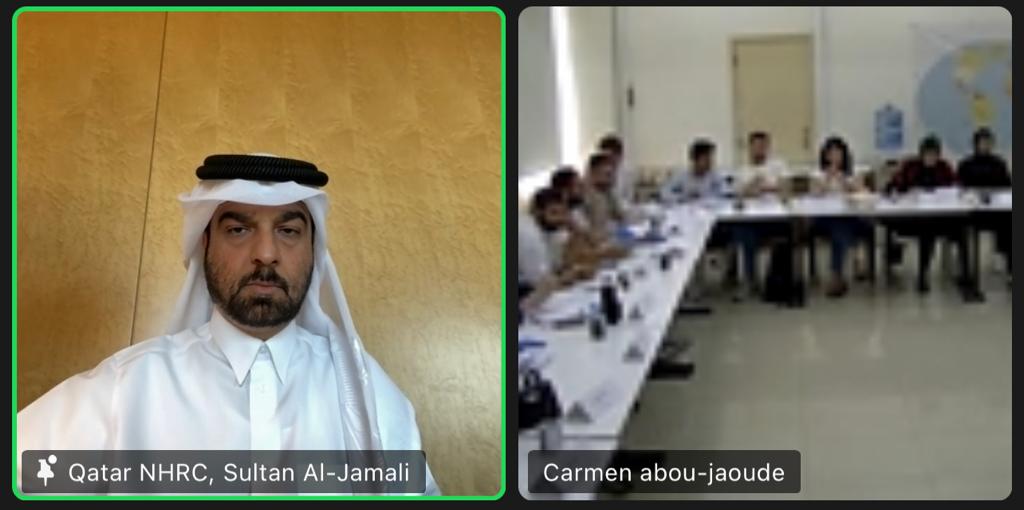
In a working paper presented to youth from the Arab region in Beirut, Al Jamali stated:
Enhancing the expertise of national human rights institutions to keep pace with regional and international developments.
National institutions are the link between civil society, governments, and the international system.
Collaboration with civil society enhances monitoring, documentation, advocacy, and support.
Active engagement with regional and international bodies enhances the independence and effectiveness of institutions.
His Excellency Sultan bin Hassan Al Jamali, Secretary-General of the Arab Network for National Human Rights Institutions, called for enhancing the expertise of national human rights institutions regarding regional and international developments in the field of human rights, as well as international and regional mechanisms, including their recommendations regarding the human rights situation, as well as their jurisprudential efforts and studies.
This came in the working paper presented by His Excellency through visual communication media in the eighteenth session on “National Mechanisms for Protecting and Promoting Human Rights” at the Regional Summer Intensive Course organized by the United Nations Training and Documentation Center for Human Rights in Southwest Asia and the Arab Region in collaboration with Saint Joseph University in Lebanon. This was within his efforts regarding education and awareness in the field of human rights for the participants from the youth in the Arab region.
Al Jamali stated that the unique position enjoyed by national institutions within the human rights system at the national and international levels has formed a bridge between civil society organizations and governments, as well as between governments and the international human rights system. He explained that they serve as a mediator between civil society institutions and governmental institutions. Their collaboration with civil society within the nation contributes to empowering them in monitoring, documentation, advocacy, and support, thus enabling them to fulfil their role in promoting and protecting human rights.
Al-Jamali emphasized the importance of cooperation with civil society organizations, given their effective role and goals that intersect with those of national institutions. This includes exchanging information, advocating for human rights defenders, monitoring the implementation of human rights standards, reporting any violations, providing support and assistance to victims of violations, and seeking their support and assistance in obtaining the necessary information to monitor the human rights situation in the context of the institution’s work to promote and protect human rights in its country, contributing to the provision of an effective protection system at the national and international levels.
In discussing the responsibilities and roles of national human rights institutions, Al-Jamali highlighted their prominent role in interacting and cooperating with international human rights mechanisms, enabling them to implement and monitor the implementation of recommendations from treaty and non-treaty bodies.
He also emphasized the need for national institutions to actively contribute to the work of regional and international human rights bodies, which helps them enhance and protect human rights, as well as maintain their independence and effectiveness. This includes providing advice and recommendations to the government and recommendations on various human rights issues, teaching human rights, related research, and organizing awareness programs and campaigns.
Al-Jamali stressed that the responsibility of considering any issue within the jurisdiction of national institutions enhances their effectiveness and is consistent with the principles of the Paris Principles regarding the independence of national institutions.
Regarding protection, Al-Jamali stated that receiving complaints, assisting complainants in accessing justice and remedies, referring complaints to the relevant authorities, and making recommendations regarding them are part of their “quasi-judicial” responsibilities. He added that institutions monitor and visit detention facilities, investigate facts, document, and prepare reports, all within their protective mandate. It is essential for national institutions to prioritize monitoring the situations of vulnerable groups such as workers, detainees, children, women, persons with disabilities, and the elderly.
Al-Jamali provided a detailed explanation of the definition of national human rights institutions established in accordance with Paris Principles of 1993, their historical dimension, responsibilities, mandates, objectives, working methods, and tools. This was aimed at deepening the understanding of the roles of national human rights institutions as important national mechanisms working to promote and protect human rights.
Responsibilities and Tasks of National Institutions
Al-Jamali, during the working paper, outlined eight positive steps to fulfil the responsibilities and tasks of national institutions and ensure their accessibility. He emphasized that national institutions, as providers of remedies, should ensure that victims have “equal and effective” access to them.
These steps include: not imposing fees for filing complaints and lawsuits, providing legal advice and assistance to victims filing complaints and lawsuits, ensuring easy access to offices for persons with disabilities, providing oral and written information in simple language, minority languages, and in easy-to-understand formats for visually impaired individuals, opening offices outside the capital in regional locations and neighbourhoods, providing services and mobile clinics to reach populations living in remote areas, having members and staff from minorities and women in the institution, with personnel capable of communicating effectively with children and the elderly, and using appropriate technology to facilitate access and communication for the national institution.