Login
Signup
News
Training workshop on the accreditation of Arab national human rights institutions with the Global Alliance of National Human Rights Institutions, 9-11 July 2019 – Morocco
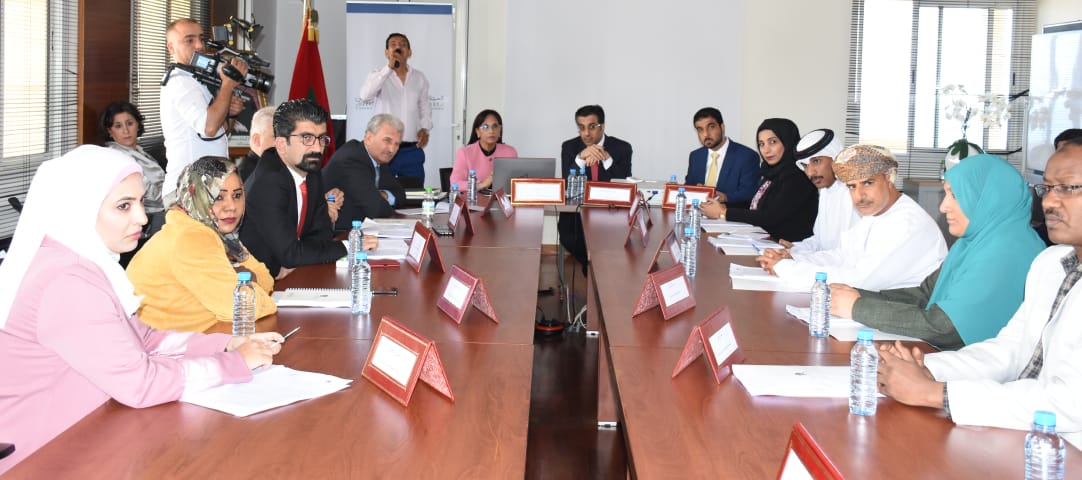
The Executive Director of the ANNHRI stressed the importance of the accreditation process with national institutions. For that, the Arab Network has always provided all assistance to institutions in the accreditation process and re-accreditation with the Accreditation Subcommittee. The ANNHRI urged national institutions to make their law of establishing compatible with the Paris Principles and to participate at the International level. The structure of the institution and the activity it carries out has a great indication of its compatibility with the Paris Principles. The Network also urged the institutions to achieve the basic recommendations issued by the accreditation committee and to prepare the accreditation file well. It expressed its willingness to provide the necessary assistance in this context, and worked on adopting a program that promotes the capabilities of NHRIs to accomplish their tasks in accordance with the Paris Principles.
This took place during the opening session of the training workshop on “Accreditation of ANHRIs at the GANHRI” which was organized by the ANNHRIs in cooperation with the NCHR during the period 9-11 July 2019 at the Rabat Institute, Idriss Benzakri For human rights.
In the context of talking about the competencies of national institutions, Mrs. Amna Bouayach, President of the NCHR in Morocco, indicated that they have expanded to exceed traditional tasks. More than half of the national institutions, including those in Morocco, have been assigned the functions of the national mechanism for the prevention of torture. This expansion of competencies makes these institutions more accountable to international bodies, including the Accreditation Subcommittee.
With regard to the accreditation standards adopted by the Accreditation Committee, Mr. Ali bin Samikh Al-Marri, Secretary of GANHRI, confirmed that they are distributed on at least twenty criteria within what is known as the Paris Principles. The most important of these are the law of establishment and conditions for membership, independence and immunity, in addition to the infrastructure, employment and budget, and the implementation of the institutions’ functions and powers mentioned in the law of their establishment.
For his part, Dr. Ali bin Samikh Al-Marri, Chairman of the NHRC-Qatar, stressed that consideration is also being given to the role of institutions in encouraging the government to join international agreements, implementing the recommendations of treaty mechanisms and the universal periodic review. The government is also being encouraged as well to play its role in spreading a culture of Human Rights, publishing thematic annual reports, issuing statements, etc.
The program of this workshop aimed to enable NHRIs to implement an effective methodology in the accreditation process, and the necessary information related to submitting the file to the Accreditation Sub-committee, especially with regard to the implementation of its mandate as stipulated in the basic documents regulating it. The program also revolved around the various stages required by the accreditation process, that is, the prior stage related to reviewing the file of the national institution, the concurrent stage of the review and the post-stage.