Login
Signup
News
15th ANNHRI General Assembly Session Held in Cairo, October27-28, 2018
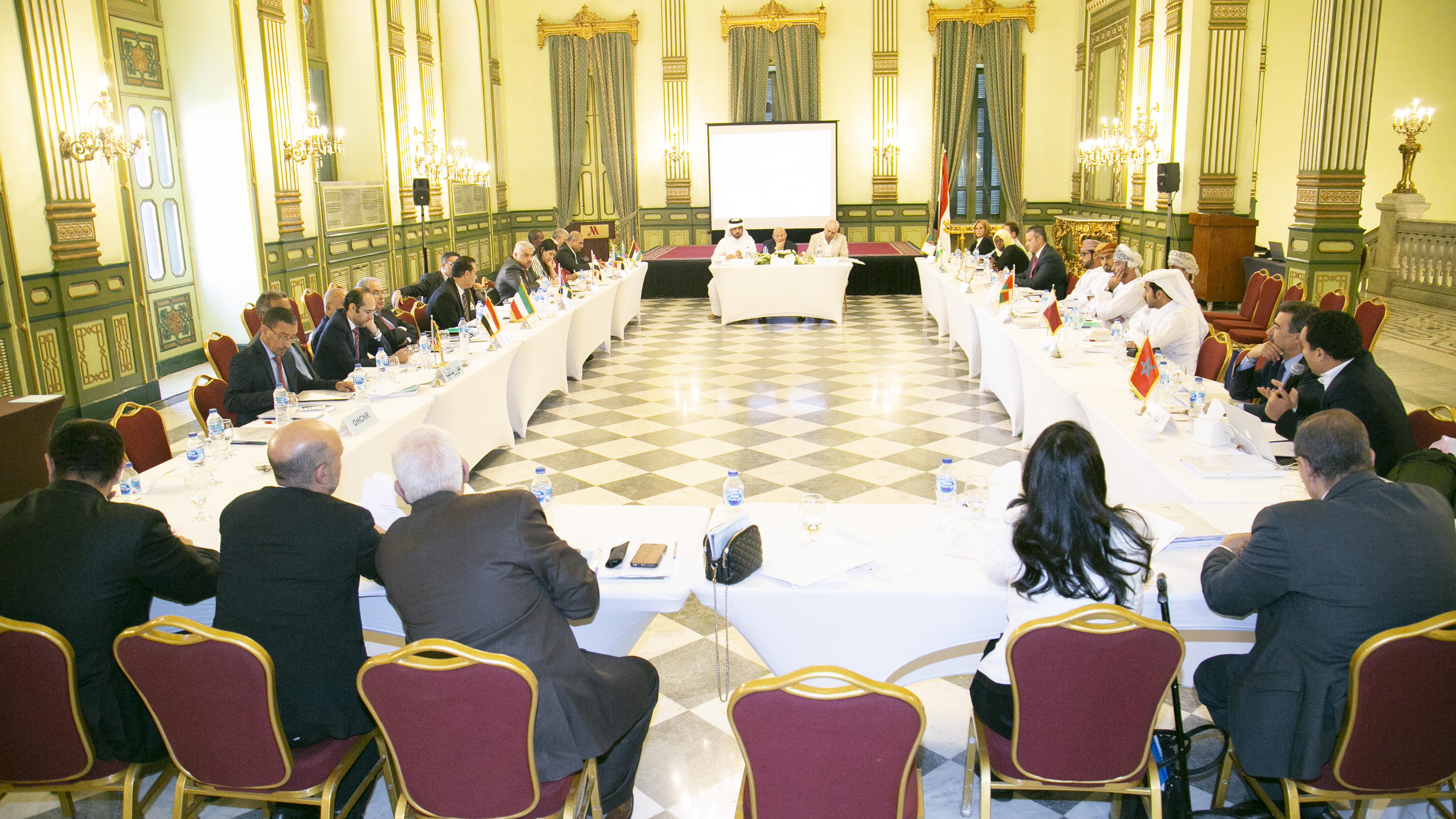
ANNHRI held its fifteenth general assembly session in the Egyptian capital (Cairo). The National Council for Human Rights in the Arab Republic of Egypt was selected as the head of the Network at its current session, succeeding the National Council for Human Rights in the Republic of Algeria.
In the same context, Mr. Sultan bin Hassan Al Jamali, ANNHRI Executive Director, stated that the fifteenth meeting of the general assembly of the Network is the key meeting in the history of the Arab Network. This is since it is taking place after eight years of launching the Network and after the second operational strategic plan of the Network is about to complete. “Of course,” Al-Jamali said, “we will assess the performance and impact to monitor the positive points, identify the negative points, develop a plan to overcome them and follow the network’s progress in promoting and protecting human rights in the Arab region.” At the same time, he confirmed that the Network pursued its work with integrity and transparency and without politicization, thanks to the member institutions’ awareness, cooperation and solidarity as well as the wise decisions of the Executive Committee and the General Assembly of the Arab Network. As a result, the general administration was allowed to follow up its tasks and implement the Network’s work plan.
Furthermore, Al-Jamali called for the cooperation of member institutions of ANNHRI. “This cooperation,” he said, “will enable the general administration to bridge gaps, highlight vulnerabilities and work to eliminate or avoid them.” He also called on the member institutions to continue supporting the Network as a human rights network that does not politicize its activities. Its aim is to promote and protect human rights by pushing and self-motivating of institutions and states. This is by empowering, encouraging, supporting and advocating from within the NHRIs while opening to and cooperating with all partners of the Network, especially HCHR, United Nations Development Program, the Arab League (including: its mechanisms and departments), the Arab Institute for Human Rights as well as the Global Alliance of National Human Rights Institutions and its regional networks.
The meeting concluded its activities on October 28. In the closing statement, the Palestinian Human Rights Commission was elected to chair ANNHRI for the next session 2019-2020. Additionally, the Palestinian issue was put on the network’s agenda permanently. An annual event will be organized to discuss occupation issue and support the Palestinian Human Rights Commission. This is in addition to the necessity to follow up on the recommendations of the (International Conference on the prolonged Israeli Occupation and the situation of Human Rights in the Occupied Palestinian Territories), organized by ANNHRI in partnership with the Independent Commission for Human Rights in Palestine, the National Center for Human Rights in Jordan and the Arab Network for National Institutions. Furthermore, the Independent Commission for Human Rights in Palestine, the National Center for Human Rights in Jordan, the National Council for Human Rights in Egypt and the Network’s general administration (based in Doha) were assigned to follow up on the recommendations of the conference held in the Jordanian capital (Amman) and the Arab seminar organized on 26/10/2018 in Cairo in cooperation with ANNHRI regarding ways to support Palestinian people’s rights and to activate the mechanisms of accountability and equity.
Moreover, the closing statement of the General Assembly of the Arab Network called for holding an international conference with the participation of all networks and the Global Alliance of National Human Rights Institutions. This is in order to discuss challenges of accreditation and reclassification, to address the difficulties faced by ANNHRI and to form a working group to consider documents of the GANHRI and submit substantive proposals to be presented during the conference.
Over its two days, the fifteenth meeting of the Network had reviewed a set of key working papers. Through these papers, the Network highlighted developments of institutions, the challenges faced by them as well as priorities the Network thinks that they need work to update its strategy. The most significant challenges included lack of governments’ responsiveness to the proposals of national institutions, failure to take their recommendations into account and the issue of combating terrorism and its implications for human rights. The armed conflicts and their profound implications for asylum, displacement, illegal immigration, and the destruction of educational and health facilities and housing were also included. Further, the sustainable development challenges, commitments of the 2030 Development Plan and harmonization of national laws with constitutional developments and international standards were included. Furthermore, lack of financial resources allocated to national institutions, promotion of economic and social rights and the relationship with United Nations mechanisms (during the process of accreditation and classification of national institutions) were included.
Regarding visions of national institutions on the priorities that should be worked on by the Arab Network, the closing statement summarized them in the necessity of following up efforts of the Network in issuing studies and reports that help in deepening the performance of NHRIs in proceeding with their previous efforts. This is in addition to issuing a study on education during the armed conflict and the guide of NHRIs in monitoring elections, and working to improve the capabilities of staff of NHRIs through training courses on (monitoring and documentation- assessing sources- writing fact-finding reports). Additionally, necessity of following up on previous decisions and recommendations issued by the Network, exchanging experiences and expertise between NHRIs and necessity of supporting civil societies concerned with defending human rights were included. Moreover, participants focused, in particular, on developments of the Palestinian issue and acts of violence carried out by the Israeli-American coalition towards the Palestinian people. Finally, participants called for adopting the outcomes of the Arab seminar on ways to support the Palestinian people’s rights and activate accountability and equity mechanisms that was held in Cairo on October 26, 2018 with the participation of ANNHRIs, Arab Organization for Human Rights and Palestinian Independent Commission for Human Rights.